<feed xmlns="http://www.w3.org/2005/Atom">
  <title>Species: Purple Sandpiper</title>
	<subtitle>Nature, wildlife, and bird photography by Sarah Fossheim 🌿</subtitle>
	<link href="https://fossheim.photography/species/"/>
  <link href="https://fossheim.photography/species/calidrisMaritima/feed.xml" rel="self"/>
  <updated>2025-02-05T00:00:00.000Z</updated>
  <id>https://fossheim.photography/species/calidrisMaritima</id>
  <author>
    <name>Sarah L. Fossheim</name>
    <email>hi@fossheim.photography</email>
	</author>

  
    <entry>
      <title>blog: The parental roles of purple sandpipers.</title>
      
        <link href="https://fossheim.photography/blog/purple-sandpiper-gender-roles-svalbard" />
      
      <updated>2024-08-29T00:00:00.000Z</updated>
      
      
        <id>https://fossheim.photography/blog/purple-sandpiper-gender-roles-svalbard</id>
      
      <content type="html"><![CDATA[
          
            
            <img src="https://res.cloudinary.com/dy8r02i02/image/upload/f_auto,w_1900,c_scale/nesseby-sandpiper-3" alt="Group of purple sandpipers foraging in the water. Two of them in the middle are in focus. In front and behind them are out of focus sandpipers." />
          
          
            <p>Earlier in August I set myself a new reading goal: read one scientific paper at the end of each work day. It can be related to any subject, but to no one’s surprise, I’ve mainly been picking up bird-related reads.</p>
<p>So far it’s been genuinely fun to learn something new every day, and on the menu this week were two articles about a bird I’ve photographed several times but know relatively little about: the purple sandpiper.</p>

          
          <div class="size-l">
<div class="collection-photos container size-l">
<div class="collection-grid" data-stretch="" data-size="" data-type="large" data-alignment="center" data-shape="normal" data-stretch="">
<div>
<a href="/photos/catalog/2023/svalbard/purple-sandpiper-1/">
<img class="main-image" src="https://res.cloudinary.com/dy8r02i02/image/upload/f_auto,w_1900,c_scale/sandpiper-svalbard-1" alt="Purple sandpiper walking on a pebble underground, in rainy but bright weather. The pruple sandpiper is a small wading bird, with long orange legs and a long orange beak. It&#39;s belly is mainly white, the back is beige/brown/blak/white speckles." />
</a>
</div>
<div>
<a href="/photos/catalog/2024/2024-04-09-varanger/purple-sandpiper-2/">
<img class="main-image" src="https://res.cloudinary.com/dy8r02i02/image/upload/f_auto,w_1900,c_scale/nesseby-sandpiper-2" alt="Purple sandpiper foraging in the water. The water is dark blue, and from the top right corner there&#39;s orange light coming into frame. The sandpiper is walking from the top right to the bottom left of the image, and standing on a twig." />
</a>
</div>
</div>
</div>
</div>
<div class="size-s">
<p>Purple sandpipers (calidris maritima) are a small wading shorebird. They overwinter along all of Norway’s shoreline (and other places around the Atlantic coast), are a year-round resident in Northern Norway, and breed as high north as Svalbard.</p>
<p>And, as I learned in the research I read this week, their sex roles during breeding season are quite unique.</p>
<h2>Gender roles of the purple sandpiper</h2>
<p>The egg incubation duties are shared more or less equally, but around hatching time, the female leaves the area until the next breeding season, and the male is the one taking care of the young.</p>
<p>When that happens with shorebirds, it’s typically because the female has multiple clutches with multiple partners. However, purple sandpipers are monogamous, the female leaves the area completely without breeding again, and, they might actually be chased away by the guys, rather than abandoning the nest.</p>
<h2>The papers</h2>
<ul>
<li><a href="https://onlinelibrary.wiley.com/doi/10.1111/j.1474-919X.1997.tb04516.x">Sex roles in the monogamous Purple Sandpiper Calidris maritima in Svalbard</a> by Elin P. Pierce</li>
<li><a href="https://academic.oup.com/beheco/article/21/2/275/320035">Why don’t female purple sandpipers perform brood are?</a> by Elin P. Pierce, Lewis W. Oring, Eivin Røskaft, Jan T. Lifjeld</li>
</ul>
<h2>At first, the female spends most time on the egg.</h2>
<p>During the first part of the incubation period (the period when birds sit on their eggs), the female purple sandpipers spend most of the time on the nest.</p>
<p>Purple sandpipers breed asynchronous, meaning not all of them start breeding at the same time. While one couple is sitting on eggs already, neighbors may still be arriving. Fights for territory are still common at this point, so it can be useful for the males to spend more time defending the territory in the start, before picking up half the load when things have calmed down.</p>
<p>The male’s reserves may be lower at the start of the incubation period too, because they’ve just used a lot of energy defending or establishing their territory at the start of the mating season. So it can be beneficial for the males to spend more time foraging so they can rebuild their strength before spending more time sitting on the eggs.</p>
</div>
<div class="size-m">
  <div class="container">
<p><a href="/photos/catalog/2024/2024-04-09-varanger/purple-sandpiper-4/"></p>
  <img class="main-image" src="https://res.cloudinary.com/dy8r02i02/image/upload/f_auto,w_1900,c_scale/nesseby-sandpiper-4" alt="Purple sandpiper foraging in very reflective light blue water that has small pieces of ice drifting into it, on a sunny day. The sandpiper is about to take something out of the water, looking at its own reflection." />
<p></a></p>
</div>
</div>
<div class="size-s container">
<h2>Overall, they incubate the eggs equally.</h2>
<p>Even though there’s a short period where the females do most of the incubation, overall the load is shared more or less equally.</p>
<p>Both parents spending equal amount of time on the nest is quite common, and even a necessity, amongst shorebirds like the purple sandpiper.</p>
<h3>Two parents are needed to harch the eggs.</h3>
<p>The rough climate and limited food availability means the sandpiper has to spend a good amount of time away from the nest to forage enough food, which is hard to combine with keeping the eggs warm and safe if you’re a single parent. Researchers observed that if one parent disappeared, the other one would eventually abandon nest and leave the area without trying to mate again.</p>
<h2>The female leaves the area around hatching time.</h2>
<p>Both parents incubate the eggs equally, right until they hatch, after which the female purple sandpipers leave the area and the dads become the sole caregivers to their offspring.</p>
<h3>There’s no advantage to being two parents after hatching.</h3>
<p>One parent can just as effectively warn chicks of danger or guide them to foraging areas as two parents, and camouflage and distraction displays are typically enough to protect the chicks from predators like skuas.</p>
<p>Additionally, considering their habitat (open tundra landscapes with low vegetation), they’re more likely to be detected by predators the larger their group is. So if two parents aren’t (significantly) better than one at raising the young, it doesn’t make sense for one to stick around and increase the risk of predation.</p>
</div>
<div class="size-s container">
  <div class="container">
<p><a href="/photos/catalog/2024/2024-04-09-varanger/purple-sandpiper-3/"></p>
  <img class="main-image" src="https://res.cloudinary.com/dy8r02i02/image/upload/f_auto,w_1900,c_scale/nesseby-sandpiper-3" alt="Group of purple sandpipers foraging in the water. Two of them in the middle are in focus. In front and behind them are out of focus sandpipers." />
<p></a></p>
</div>
</div>
<div class="size-s">
<h3>Both male and female are equally good parents.</h3>
<p>Researchers wondered if the male was the one looking after the chicks because they were better at protecting them from predators, or because the female sandpipers were weakened after using a lot of energy on the eggs.</p>
<p>So one breeding season, they removed the male from a set of nests right around hatching time, the females from another set of nests, and compared them to “untouched” couples. And what they found was quite interesting: male and female purple sandpipers were equally good parents.</p>
<p>They attended to their chicks for the same amount of time as males, showed similar responses to predators, and were just as successful at raising at least one chick to fledging. The chicks raised by female sandpipers gained weight at similar rates than those raised by the males, and the weight loss amongst the adults was similar too.</p>
<h3>Potential advantages for the males to stick around.</h3>
<p>The male purple sandpipers might get several advantages by sticking around and taking care of the young.</p>
<p>They can prevent other couples from taking up this area, which reduces the chance of territorial conflicts the next year. Additionally, female purple sandpipers are very faithful to their breeding sites, regardless of the male.</p>
<p>So by sticking around they can keep the territory, and by keeping the territory they keep their mate.</p>
<p>Spending more time on the breeding grounds also gives the males the chance to “advertise” themselves to potential future partners, since there’s no guarantee their current one will survive the winter.</p>
<h3>Abandoning nest or being excluded?</h3>
<p>This could mean that female sandpipers abandon the nest not because they want to, but because they physically get excluded from the area.</p>
<p>Something that supports that theory is that male purple sandpipers have been observed chasing their female away from the nest after hatching.</p>
</div>
<div class="size-m container">
  <div class="container">
<p><a href="/photos/catalog/2024/2024-04-09-varanger/purple-sandpiper-5/"></p>
  <img class="main-image" src="https://res.cloudinary.com/dy8r02i02/image/upload/f_auto,w_1900,c_scale/nesseby-sandpiper-5" alt="Purple sandpiper foraging in very reflective light blue water. The sandpiper is having its beak in the water, while walking from the right to the left of the frame." />
<p></a></p>
</div>
</div>
<div class="size-s container">
<h2>To sum it up</h2>
<p>Purple sandpipers are monogamous and spend an equal amount of time sitting on the eggs, but shortly after hatching the females leave the area.</p>
<p>They do show interest in parenting, and when forced to raise young they’re equally good and strong parents as their male counterparts, so it’s believed the male pushes them out because there are no advantages to being two parents, and more advantages for him to be the single parent.</p>
<p>By staying in the area he increases the chance his current partner will re-mate with him next year, while also getting the chance to make himself attractive to other females, in case his current partner doesn’t survive the migrations.</p>
<h2>Prints</h2>
<p>The pictures from this post are for sale in my <a href="https://shop.fossheim.photography">store</a>, and two are also <a href="https://ko-fi.com/fosstography/shop">available for download <em>(pay what you want)</em></a>:</p>
<ul>
<li><a href="https://shop.fossheim.photography/products/purple-sandpiper-i">Purple Sandpiper I</a></li>
<li><a href="https://shop.fossheim.photography/products/purple-sandpiper-ii">Purple Sandpiper II</a></li>
<li><a href="https://shop.fossheim.photography/products/purple-sandpiper-iii">Purple Sandpiper III</a></li>
<li><a href="https://ko-fi.com/s/bc402e87f9">Purple Sandpiper Phone Wallpaper</a></li>
<li><a href="https://ko-fi.com/s/252c925fb6">Purple Sandpiper Desktop Wallpaper</a></li>
</ul>
</div>

        ]]>
      </content>
    </entry>
  
    <entry>
      <title>photo: Purple Sandpiper, Varanger</title>
      
        <link href="https://fossheim.photography/photos/catalog/2024/2024-04-09-varanger/purple-sandpiper-1" />
      
      <updated>2024-04-07T00:00:00.000Z</updated>
      
      
        <id>https://fossheim.photography/photos/catalog/2024/2024-04-09-varanger/purple-sandpiper-1"</id>
      
      <content type="html"><![CDATA[
          
            <img src="https://res.cloudinary.com/dy8r02i02/image/upload/f_auto,w_1900,c_scale/nesseby-sandpiper-1" alt="Purple sandpiper foraging along an icey coastline, in purple light. The sandpiper is hanging forward, its long orange beak reachign for something on the ground right under the water." />
          
          
            <p>Purple sandpiper foraging for food along the coast by Nesseby in northern Norway.</p>
<p>When I realized how beautifully blue-purple the light became around sunset, I knew I had to head to a beach and find some purple sandpipers to photograph and photograph them in &quot;their&quot; light.</p>


        ]]>
      </content>
    </entry>
  
    <entry>
      <title>photo: Purple Sandpiper, Varanger</title>
      
        <link href="https://fossheim.photography/photos/catalog/2024/2024-04-09-varanger/purple-sandpiper-4" />
      
      <updated>2024-04-04T00:00:00.000Z</updated>
      
      
        <id>https://fossheim.photography/photos/catalog/2024/2024-04-09-varanger/purple-sandpiper-4"</id>
      
      <content type="html"><![CDATA[
          
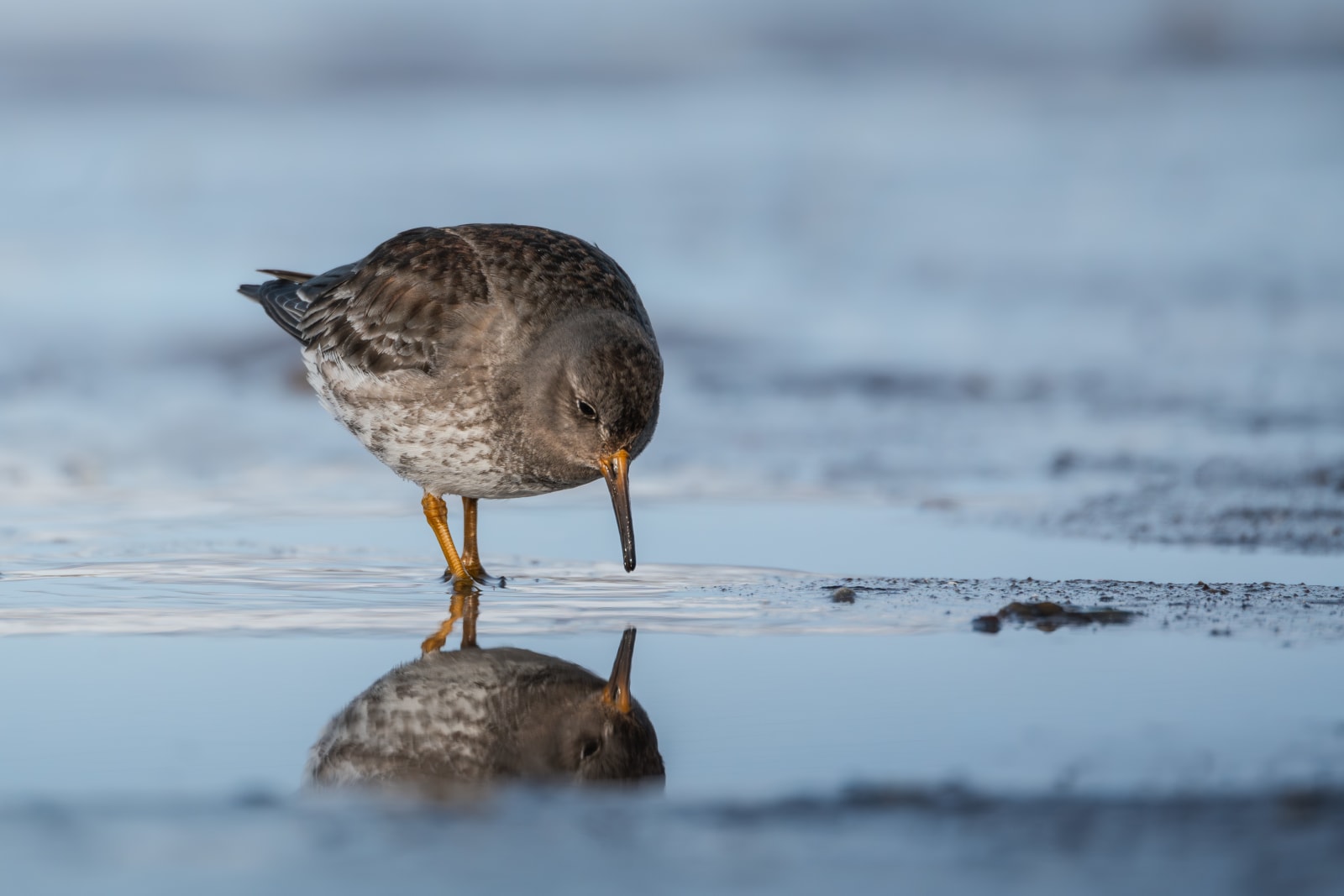
            <img src="https://res.cloudinary.com/dy8r02i02/image/upload/f_auto,w_1900,c_scale/nesseby-sandpiper-4" alt="Purple sandpiper foraging in very reflective light blue water that has small pieces of ice drifting into it, on a sunny day. The sandpiper is about to take something out of the water, looking at its own reflection." />
          
          
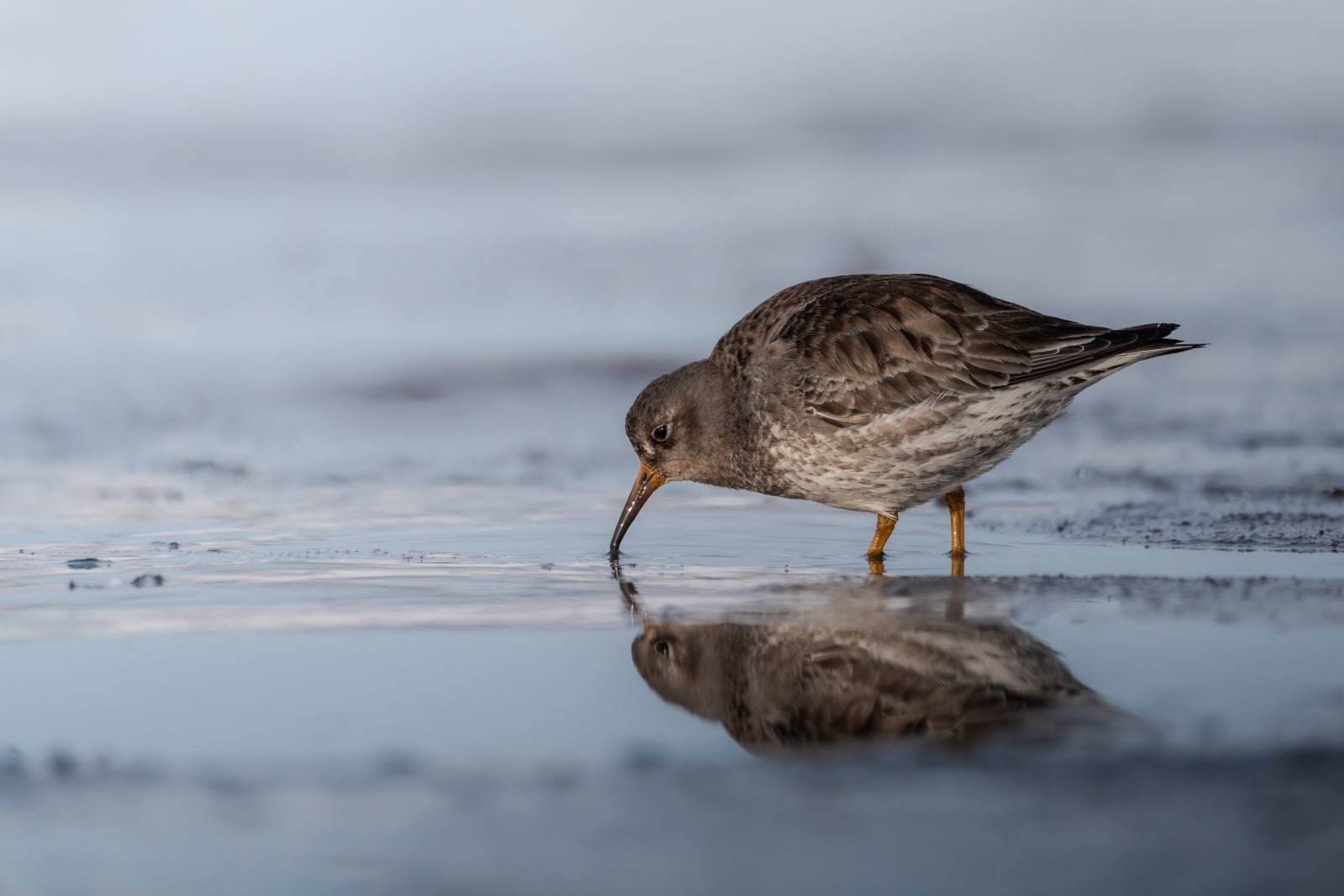
            <p>Purple sandpiper foraging for food along the coast by Nesseby in northern Norway.</p>
<p>The tides are very noticeable at this beach, and many waders can be found following the water. During winter and spring, that's mainly purple sandpipers, which are tough enough to overwinter in the north of Norway as well.</p>


        ]]>
      </content>
    </entry>
  
    <entry>
      <title>photo: Purple Sandpiper, Varanger</title>
      
        <link href="https://fossheim.photography/photos/catalog/2024/2024-04-09-varanger/purple-sandpiper-2" />
      
      <updated>2024-04-04T00:00:00.000Z</updated>
      
      
        <id>https://fossheim.photography/photos/catalog/2024/2024-04-09-varanger/purple-sandpiper-2"</id>
      
      <content type="html"><![CDATA[
          
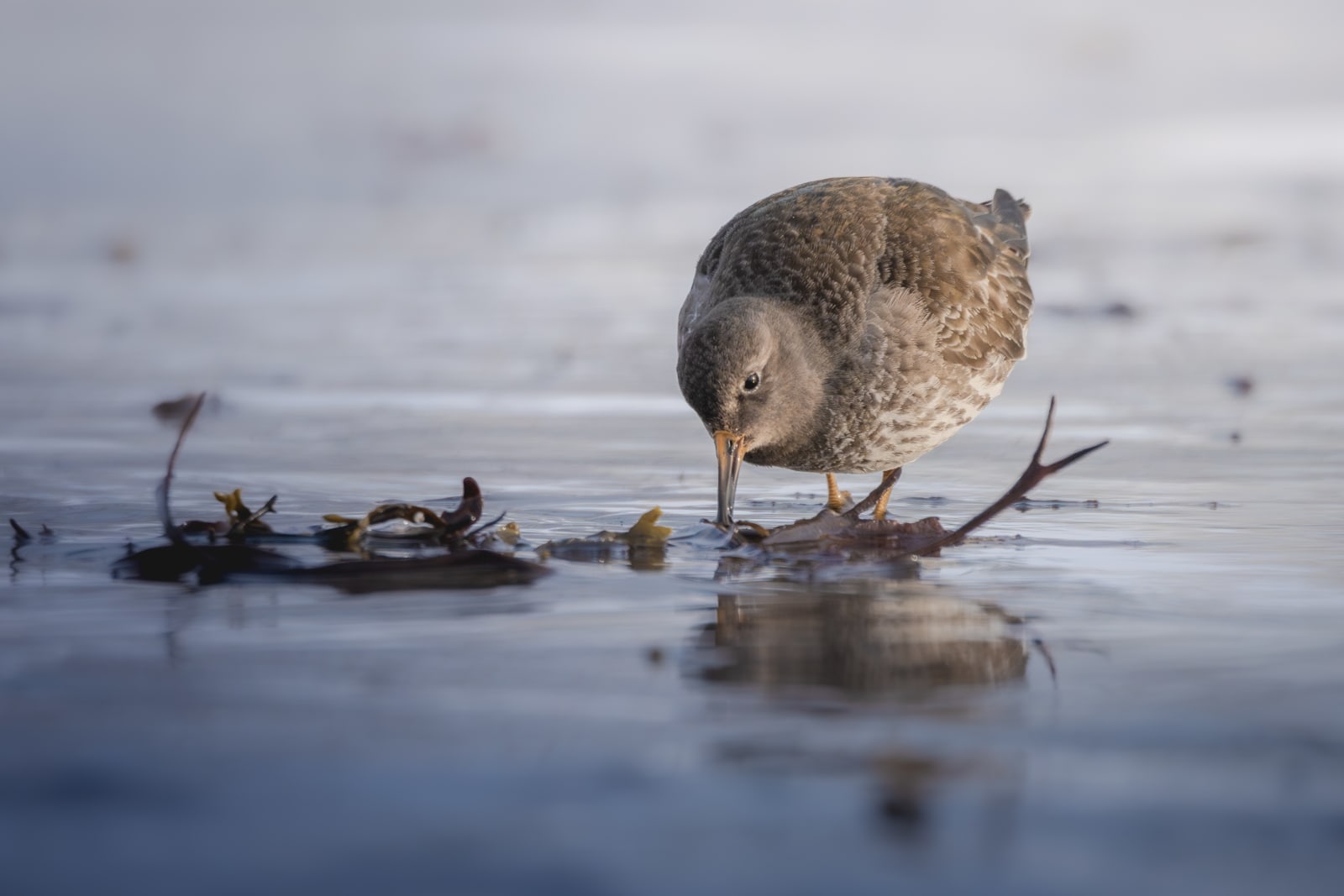
            <img src="https://res.cloudinary.com/dy8r02i02/image/upload/f_auto,w_1900,c_scale/nesseby-sandpiper-2" alt="Purple sandpiper foraging in the water. The water is dark blue, and from the top right corner there&#39;s orange light coming into frame. The sandpiper is walking from the top right to the bottom left of the image, and standing on a twig." />
          
          
            <p>Purple sandpiper foraging for food along the coast by Nesseby in northern Norway.</p>
<p>The tides are very noticeable at this beach, and many waders can be found following the water. During winter and spring, that's mainly purple sandpipers, which are tough enough to overwinter in the north of Norway as well.</p>


        ]]>
      </content>
    </entry>
  
    <entry>
      <title>photo: Purple Sandpiper, Varanger</title>
      
        <link href="https://fossheim.photography/photos/catalog/2024/2024-04-09-varanger/purple-sandpiper-3" />
      
      <updated>2024-04-04T00:00:00.000Z</updated>
      
      
        <id>https://fossheim.photography/photos/catalog/2024/2024-04-09-varanger/purple-sandpiper-3"</id>
      
      <content type="html"><![CDATA[
          
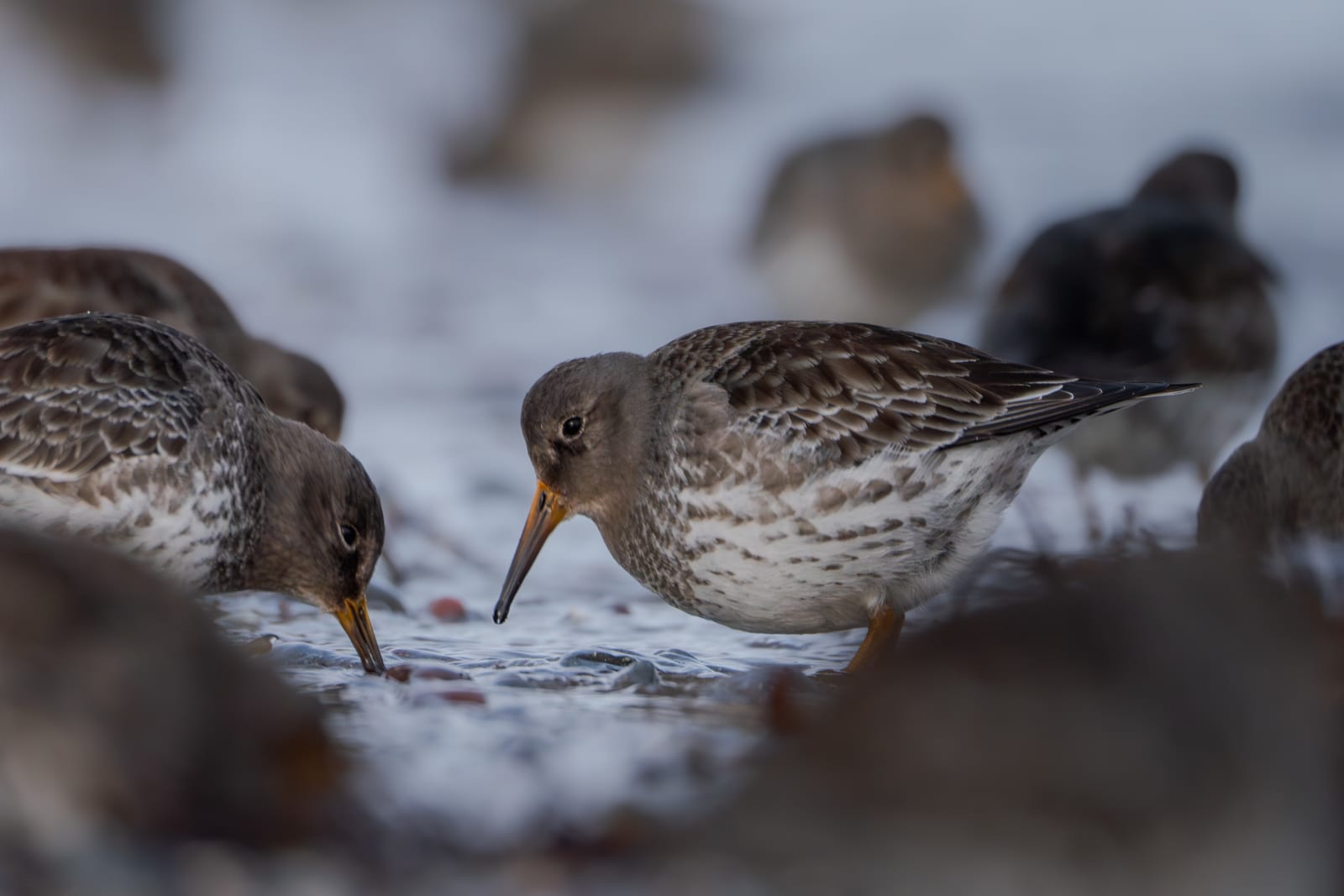
            <img src="https://res.cloudinary.com/dy8r02i02/image/upload/f_auto,w_1900,c_scale/nesseby-sandpiper-3" alt="Group of purple sandpipers foraging in the water. Two of them in the middle are in focus. In front and behind them are out of focus sandpipers." />
          
          
            <p>Purple sandpiper foraging for food along the coast by Nesseby in northern Norway.</p>
<p>The tides are very noticeable at this beach, and many waders can be found following the water. During winter and spring, that's mainly purple sandpipers, which are tough enough to overwinter in the north of Norway as well.</p>


        ]]>
      </content>
    </entry>
  
    <entry>
      <title>photo: Purple Sandpiper, Varanger</title>
      
        <link href="https://fossheim.photography/photos/catalog/2024/2024-04-09-varanger/purple-sandpiper-5" />
      
      <updated>2024-04-04T00:00:00.000Z</updated>
      
      
        <id>https://fossheim.photography/photos/catalog/2024/2024-04-09-varanger/purple-sandpiper-5"</id>
      
      <content type="html"><![CDATA[
          
            <img src="https://res.cloudinary.com/dy8r02i02/image/upload/f_auto,w_1900,c_scale/nesseby-sandpiper-5" alt="Purple sandpiper foraging in very reflective light blue water. The sandpiper is having its beak in the water, while walking from the right to the left of the frame." />
          
          
            <p>Purple sandpiper foraging for food along the coast by Nesseby in northern Norway.</p>
<p>The tides are very noticeable at this beach, and many waders can be found following the water. During winter and spring, that's mainly purple sandpipers, which are tough enough to overwinter in the north of Norway as well.</p>


        ]]>
      </content>
    </entry>
  
    <entry>
      <title>photo: Purple Sandpiper in Svalbard</title>
      
        <link href="https://fossheim.photography/photos/catalog/2023/svalbard/purple-sandpiper-1" />
      
      <updated>2023-07-28T00:00:00.000Z</updated>
      
      
        <id>https://fossheim.photography/photos/catalog/2023/svalbard/purple-sandpiper-1"</id>
      
      <content type="html"><![CDATA[
          
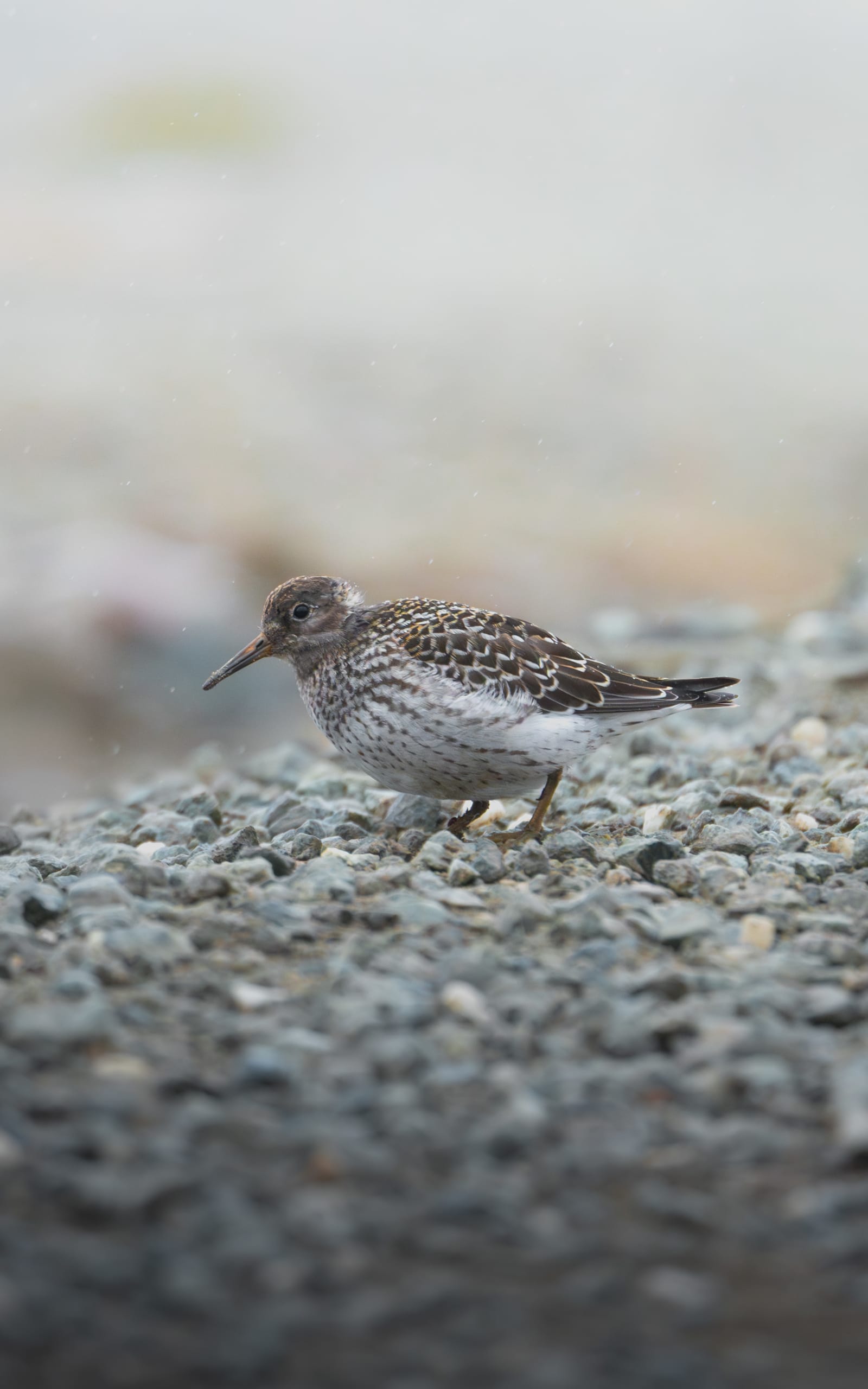
            <img src="https://res.cloudinary.com/dy8r02i02/image/upload/f_auto,w_1900,c_scale/sandpiper-svalbard-1" alt="Purple sandpiper walking on a pebble underground, in rainy but bright weather. The pruple sandpiper is a small wading bird, with long orange legs and a long orange beak. It&#39;s belly is mainly white, the back is beige/brown/blak/white speckles." />
          
          
            <p>The purple sandpiper is a small wading shorebird, which breeds in the arctic.</p>
<p>This picture was taken during my trip to Svalbard in July 2023, just outside of Longyearbyen, close to the arctic tern breeding grounds by the airport.</p>
<p>It was a rainy day, and the plan was to bird watch from a small bird watching house by an arctic tern breeding ground. As soon as we exited the car the terns started chasing us away.</p>
<p>While retreating to give the terns their space (they attack because they're stressed about their young) and protect our heads, I noticed this little purple sandpiper looking at us from the side of the road.</p>
<p>They're so cute 🥹</p>


        ]]>
      </content>
    </entry>
  
</feed>