<feed xmlns="http://www.w3.org/2005/Atom">
  <title>Collection: Finnmark</title>
	<subtitle>Nature, wildlife, and bird photography by Sarah Fossheim 🌿</subtitle>
	<link href="https://fossheim.photography/collections/"/>
  <link href="https://fossheim.photography/collections/location-finnmark/feed.xml" rel="self"/>
  <updated>2025-02-05T00:00:00.000Z</updated>
  <id>https://fossheim.photography/collections/location-finnmark</id>
  <author>
    <name>Sarah L. Fossheim</name>
    <email>hi@fossheim.photography</email>
	</author>

  
    <entry>
      <title>blog: An evening with thousands of gulls in Hamningberg</title>
      
        <link href="https://fossheim.photography/blog/2024-08-12-gulls-hamningberg" />
      
      
      <updated>2024-08-12T00:00:00.000Z</updated>
      
      
        <id>https://fossheim.photography/blog/2024-08-12-gulls-hamningberg</id>
      
      <content type="html"><![CDATA[
          
            
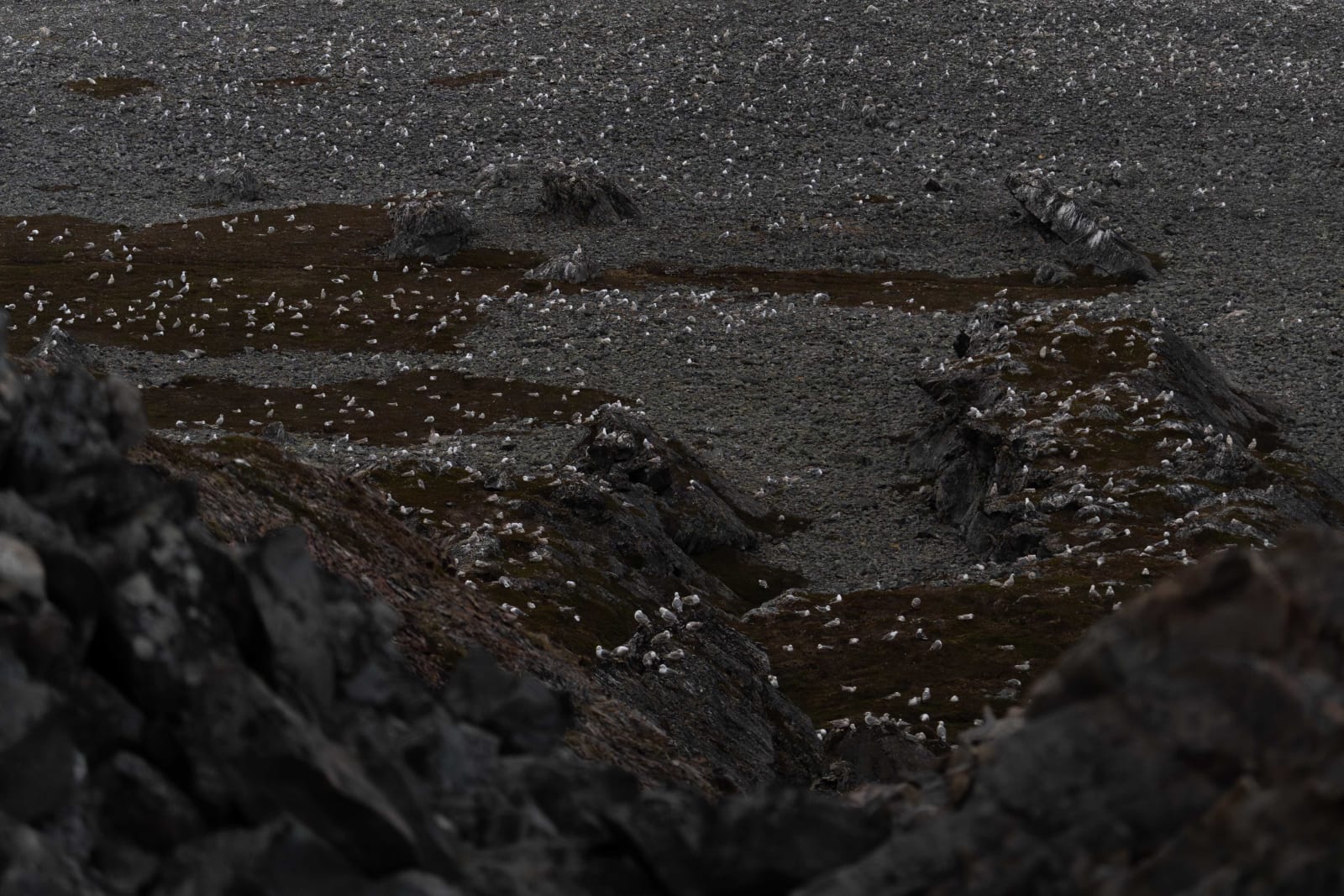
            <img src="https://res.cloudinary.com/dy8r02i02/image/upload/f_auto,w_1900,c_scale/hamningberg-overview-1" alt="Wide picture of a rocky beach with mountains on either side, and thousands of herring gulls and great black-backed gulls (mostly juveniles/below 4yo) all over the beach, showing up as little white dots against the gray rocks." />
          
          
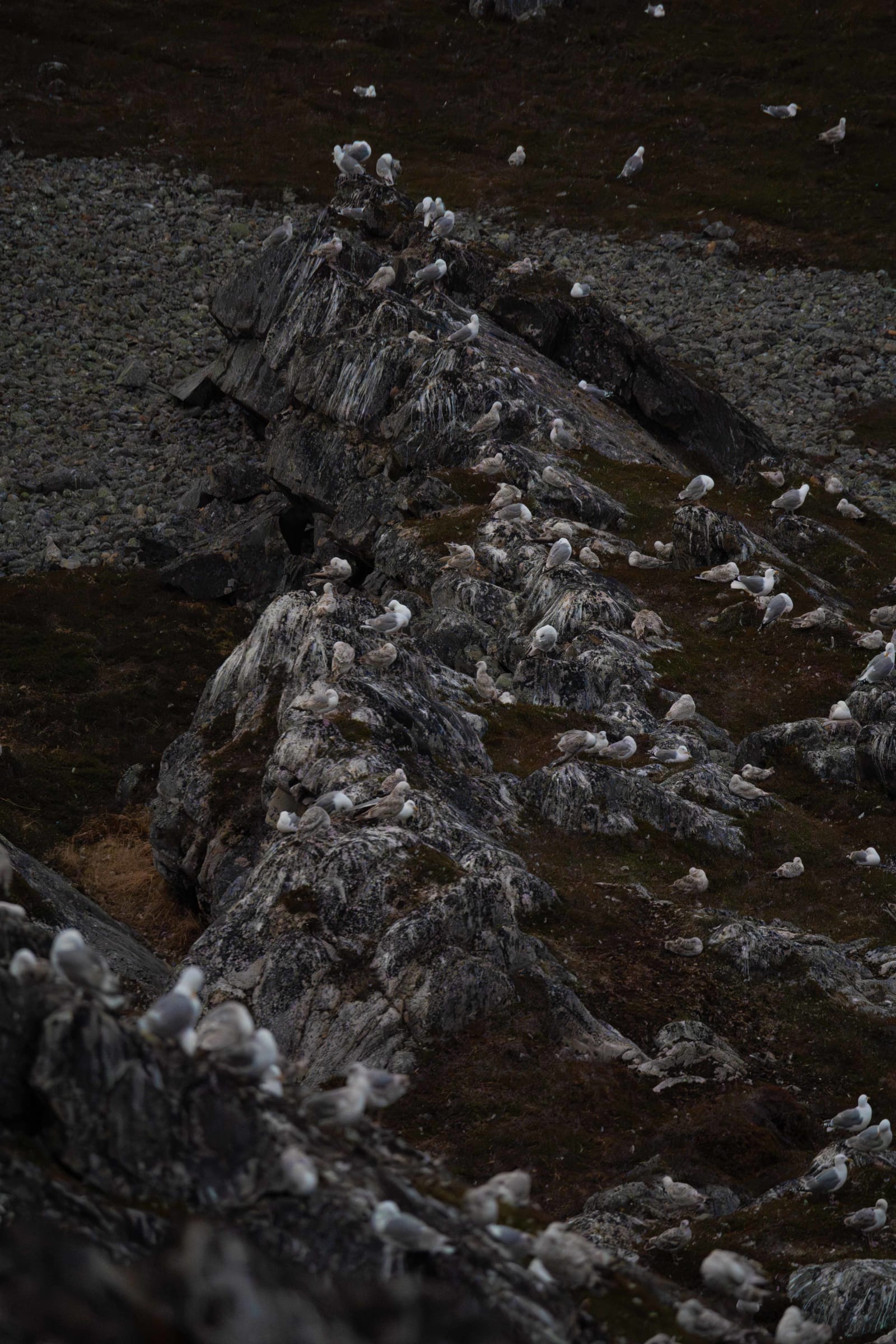
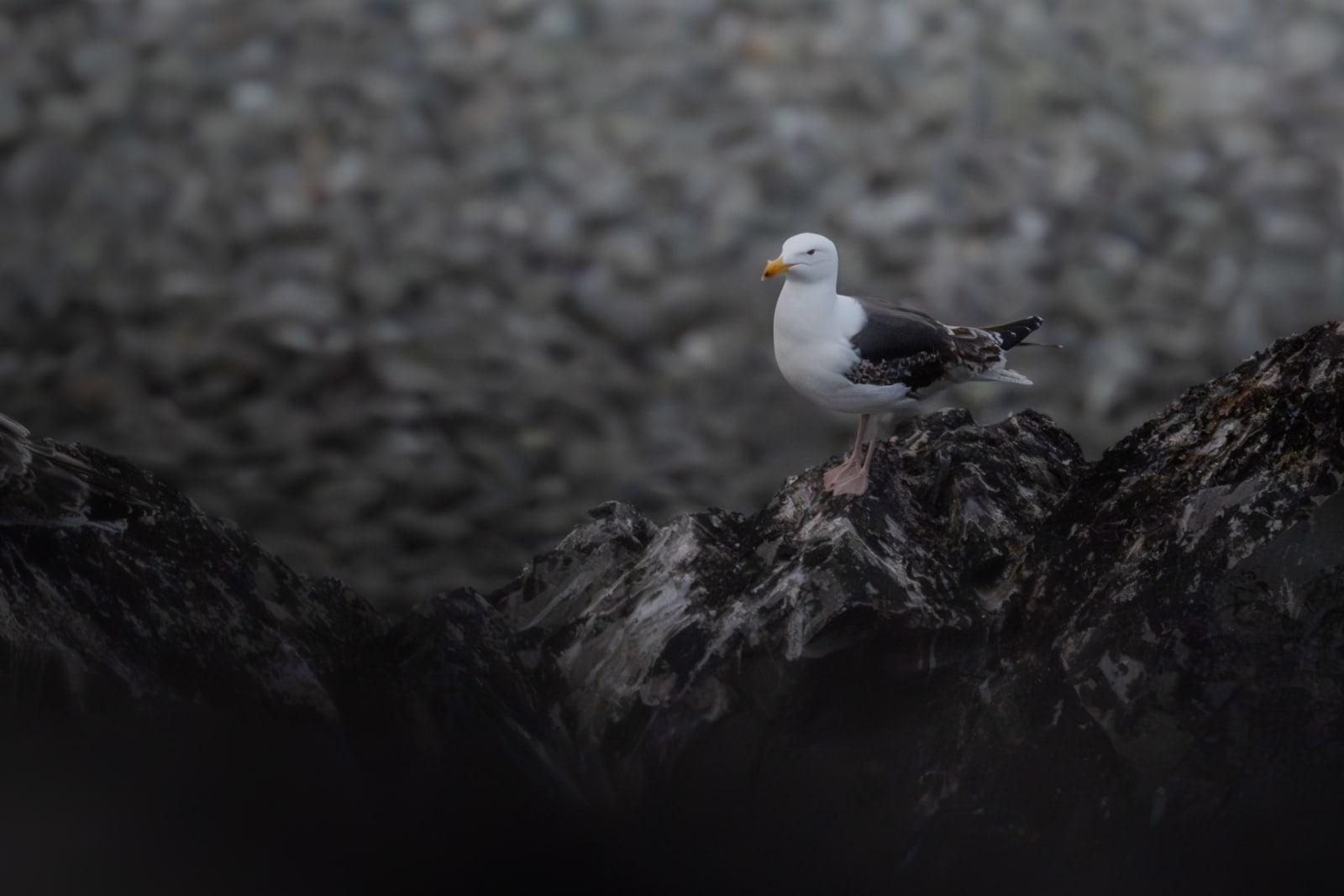
            <p>This summer I met a large flock of gulls (mainly herring gulls and great black-backed gulls) on the beach in Hamningberg, where they blend in perfectly with their moon-like surroundings.</p>
<p>It was incredible to sit and observe this man wild seabirds in their natural element, and it left me wondering <em>how many</em> gulls we saw that night exactly. So when I came home, I went through my pictures and counted.</p>

          
          <div class="size-s">
<p>This summer, in June, we spent a night in Hamningberg, a small village at the end of the road along the coast of Varanger.</p>
<p>Hamningberg is maybe best known for the otherworldly landscapes and the scenic road leading to the town, and it has an interesting history as well, being one of the only towns not burned down by the Germans during the Second World War.</p>
<p>But what fascinated me the most this trip, and what made our evening there a highlight of our summer, was the the incredibly high amount of gulls hunting and roosting along the shoreline.</p>
</div>
<div class="size-l">
<div class="collection-photos container size-l">
<div class="collection-grid" data-stretch="" data-size="" data-type="large" data-alignment="center" data-shape="normal" data-stretch="">
<div>
<a href="/photos/catalog/2024-06-16-hamningberg/gulls-beach-1/">
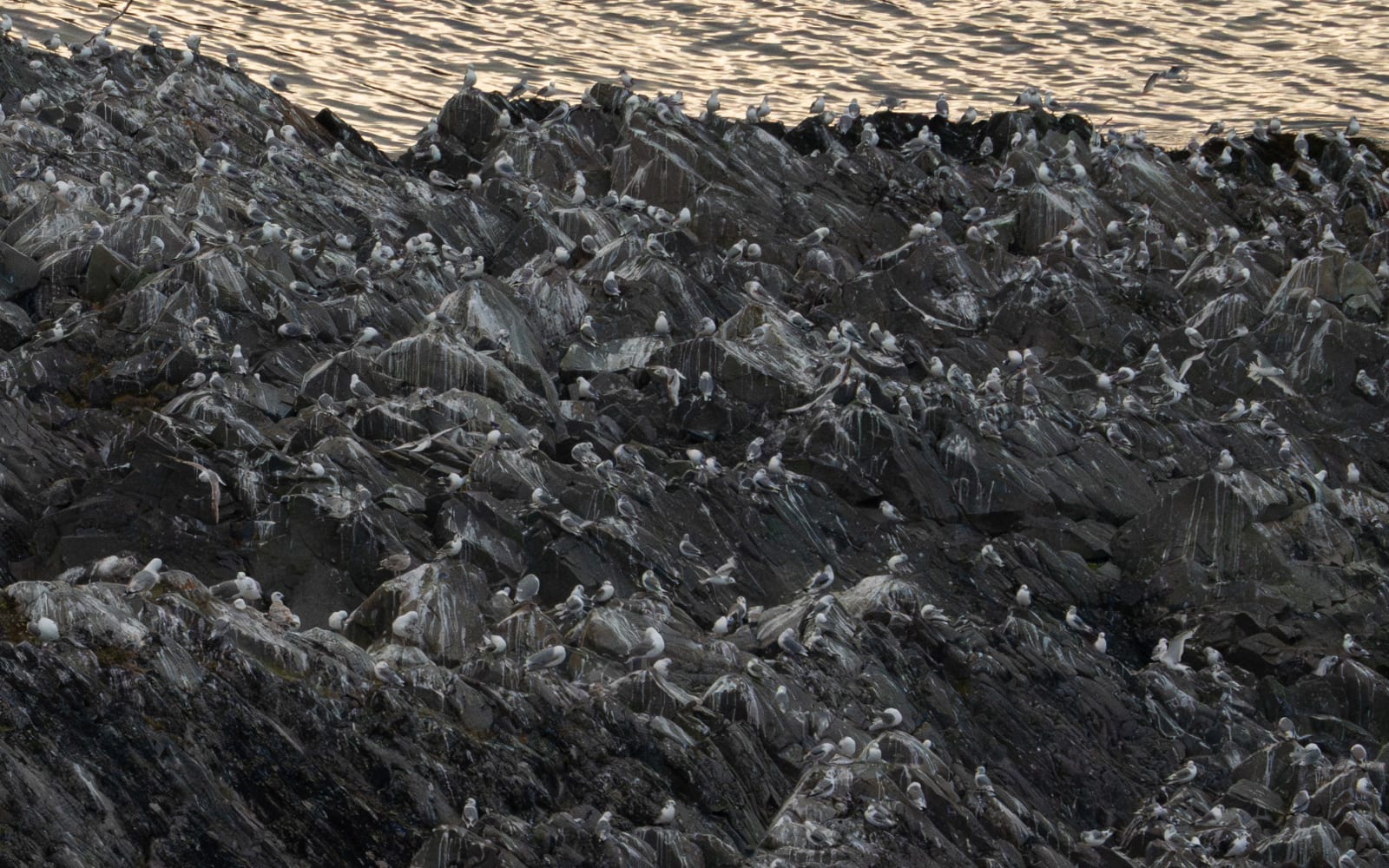
<img class="main-image" src="https://res.cloudinary.com/dy8r02i02/image/upload/f_auto,w_1900,c_scale/gulls-beach-1" alt="Zoomed in picture of a rocky beach with mountains on either side, and thousands of herring gulls and great black-backed gulls (mostly juveniles/below 4yo) all over the beach, showing up as little white dots against the gray rocks." />
</a>
</div>
<div>
<a href="/photos/catalog/2024-06-16-hamningberg/hamningberg-gulls-1/">
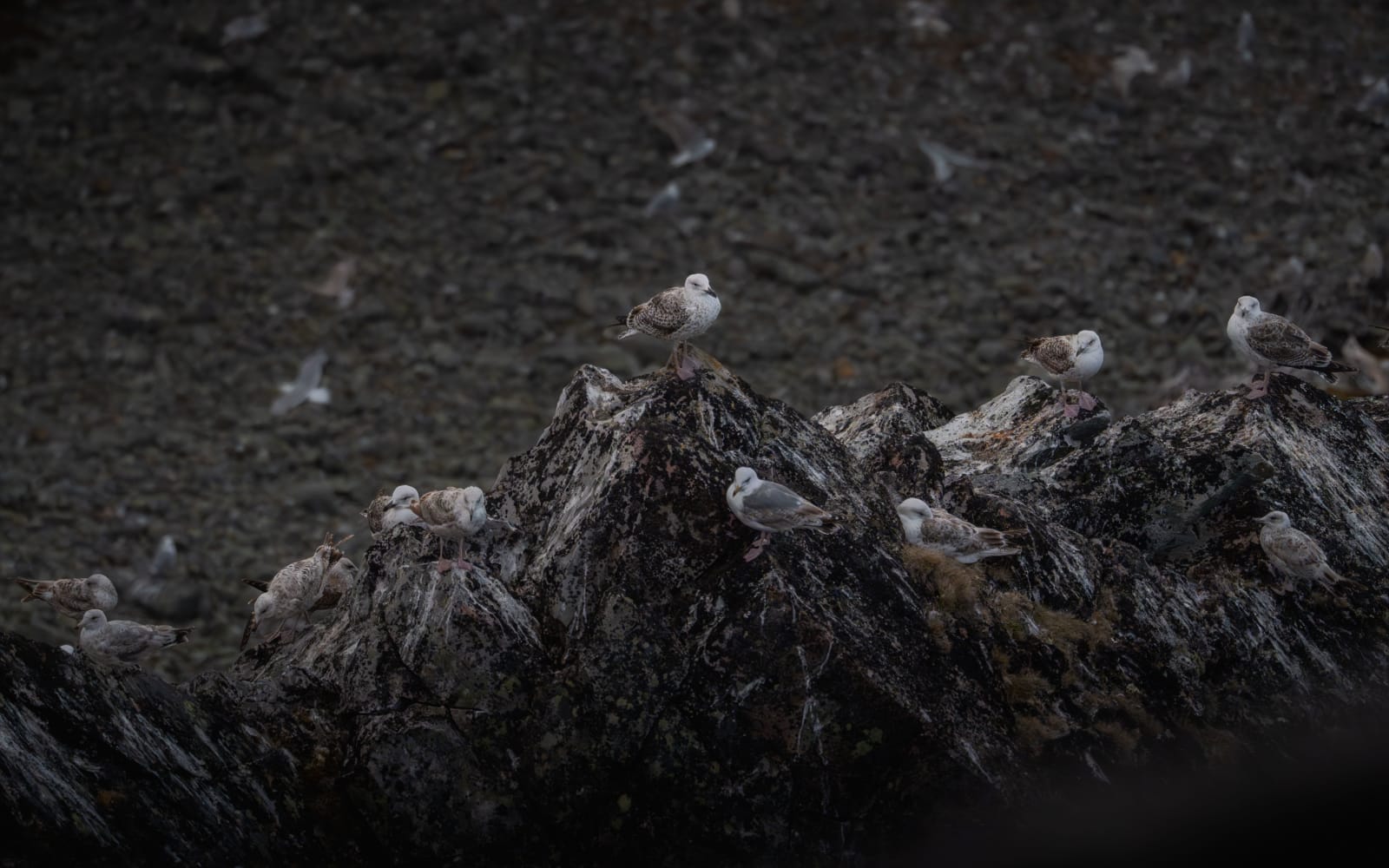
<img class="main-image" src="https://res.cloudinary.com/dy8r02i02/image/upload/f_auto,w_1900,c_scale/hamningberg-gulls-2" alt="Zoomed in picture of a large flock of herring gulls (mostly juveniles, and some adilts) standing on top of a rocky landscape with moss and grass growing between the rocks. There&#39;s white poop on the rocks, letting the gulls blend in perfectly." />
</a>
</div>
</div>
</div>
</div>
<div class="size-s container">
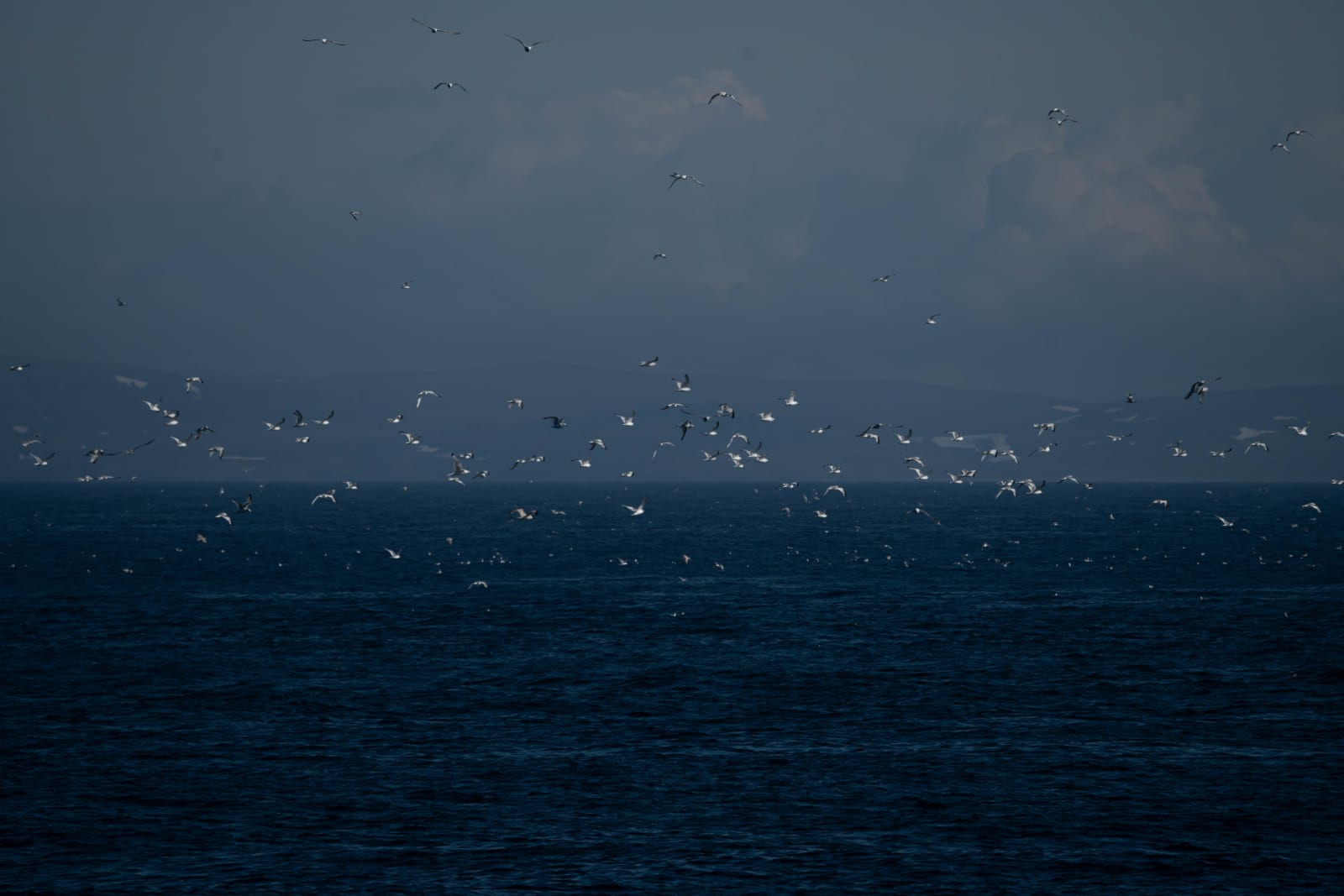
<p>We were lucky, because there was a lot of whale activity in the area while we were visiting. And where there are whales there’s fish, which means the gulls follow as well.</p>
</div>
<div class="size-s">
  <div class="container">
<p><a href="/photos/catalog/2024-06-16-hamningberg/gulls-sea-1/"></p>
  <img class="main-image" src="https://res.cloudinary.com/dy8r02i02/image/upload/f_auto,w_1900,c_scale/hamningberg-gulls-sea" alt="Very large group of gulls flying over the blue ocean, with mountains and clouds in the background, on a very sunny day." />
<p></a></p>
</div>
</div>
<div class="size-s container">
<p>I had read a lot about a rich bird life in the area, but we visited Hamningberg a few times before and could honestly not remember seeing that many birds there the preview years, so the show we got this year was a welcome surprise.</p>
</div>
<div class="size-m">
  <div class="container">
<p><a href="/photos/catalog/2024-06-16-hamningberg/hamningberg-gulls-beach-1/"></p>
  <img class="main-image" src="https://res.cloudinary.com/dy8r02i02/image/upload/f_auto,w_1900,c_scale/Hamningberg-gulls-beach-1" alt="A huge flock of herring gulls flying off simultaneously, on a very rocky landscape by tghe beach, photographed from above." />
<p></a></p>
</div>
</div>
<div class="size-s container">
<p>During our evening walk, we followed the perletur hiking trail up to Hardbaken, where we were greeted with the sight of hundreds, (or thousands?), of herring gulls and great black-backed gulls roosting along the rocky hills and beach, while other flocks of gulls were still following the whales at sea for a late night snack.</p>
<p>We were already impressed by the amount of gulls sitting on the side of the rocks and in the grass, and were completely blown away when we noticed an additional sea of gulls gathered on the stone beach, blending in perfectly with their environment.</p>
</div>
<div class="size-l">
<div class="collection-photos container size-l">
<div class="collection-grid" data-stretch="" data-size="" data-type="medium" data-alignment="center" data-shape="square" data-stretch="">
<div>
<a href="/photos/catalog/2024-06-23-varanger/svartbak/">
<img class="main-image" src="https://res.cloudinary.com/dy8r02i02/image/upload/f_auto,w_1900,c_scale/svartbak-varanger-1" alt="Near-adult great black-backed gull standing on a rocky coastline, blending in well with its environment. The GBBG is a large gull, with pink feet and black wings, and this indivisual still has some white/brown juvenile feathers left on the wings." />
</a>
</div>
<div>
<a href="/photos/catalog/2024-06-23-varanger/herring-gull/">
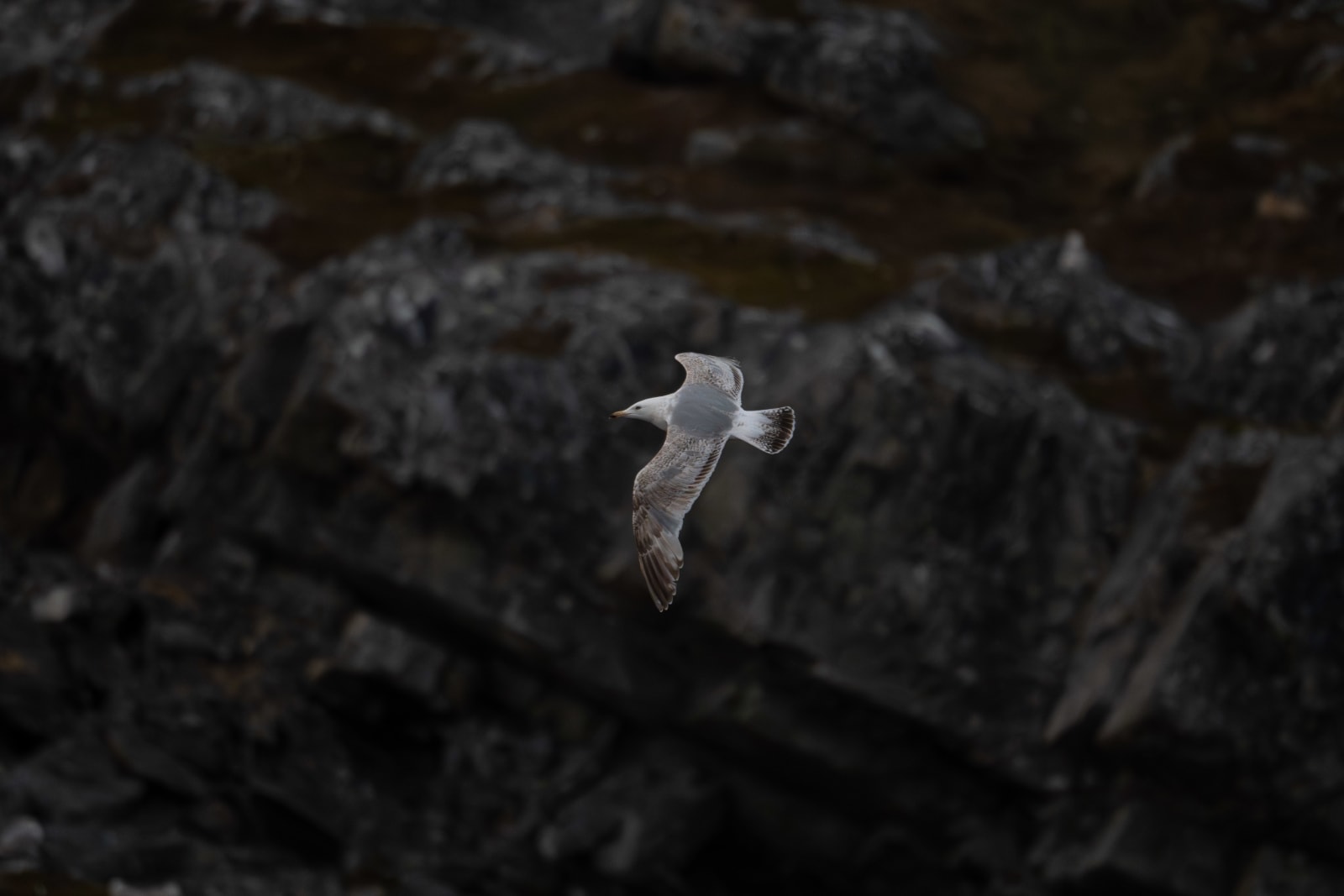
<img class="main-image" src="https://res.cloudinary.com/dy8r02i02/image/upload/f_auto,w_1900,c_scale/herring-gull-varanger-1" alt="Herring gull in flight, with a rocky shoreline as the backdrop. The herring gull is not fully adult yet and still has some brown and white spotted feathers on the wings, along with the gray adult feathers." />
</a>
</div>
<div>
<a href="/photos/catalog/2024-06-16-hamningberg/hamningberg-gulls-2/">
<img class="main-image" src="https://res.cloudinary.com/dy8r02i02/image/upload/f_auto,w_1900,c_scale/hamningberg-gulls-1" alt="Zoomed in picture of a large flock of herring gulls (mostly juveniles, and some adilts) standing on top of a rocky landscape with moss and grass growing between the rocks. There&#39;s white poop on the rocks, letting the gulls blend in perfectly." />
</a>
</div>
</div>
</div>
</div>
<div class="size-s container">
<p>It left us wondering: how many gulls were we actually looking at?</p>
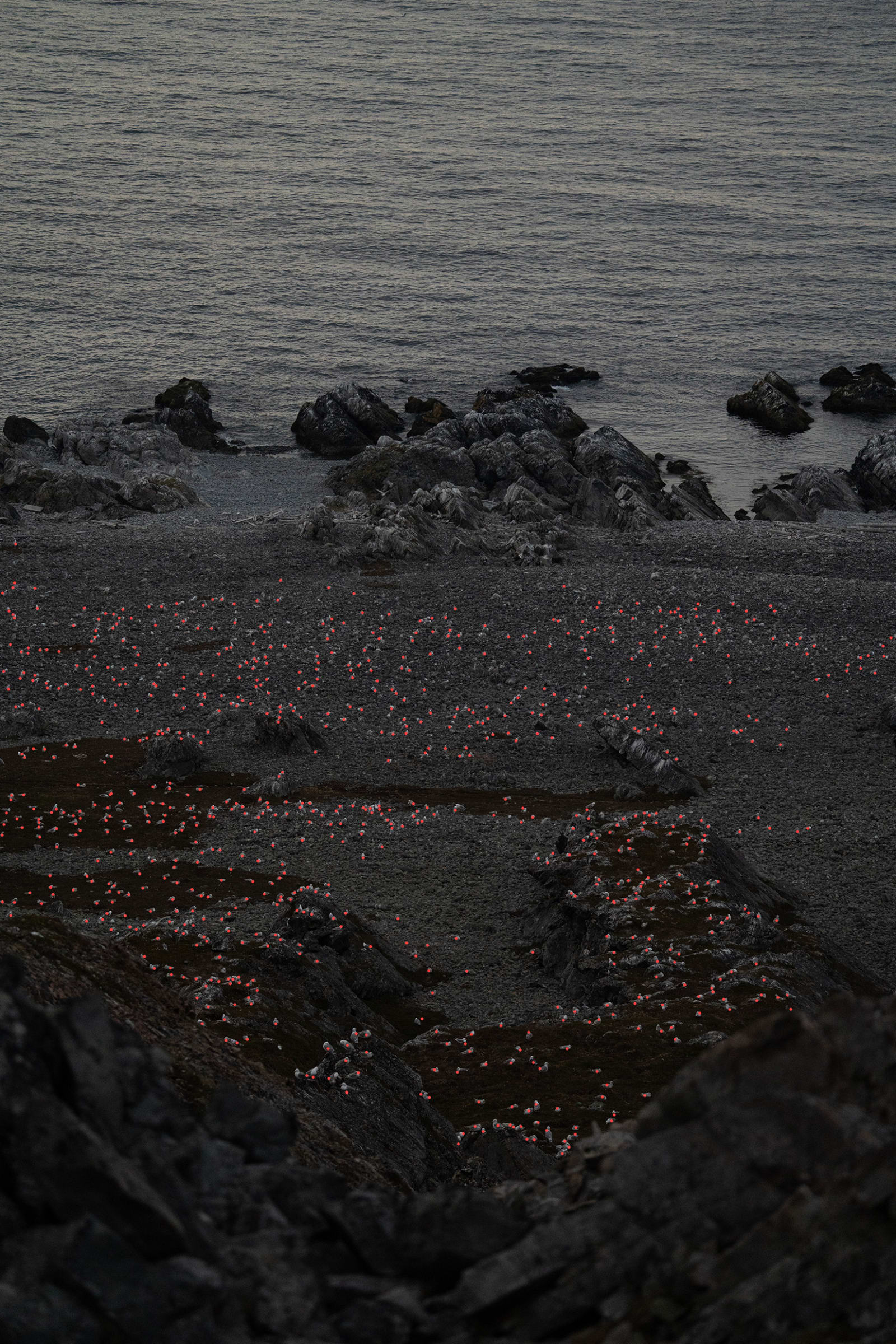
<p>So I took a “wide” angle picture (35mm) of the view from the spot where we were sitting, opened it in photoshop, and started counting.</p>
</div>
<div class="size-l">
  <div class="container">
<p><a href="/photos/catalog/2024-06-16-hamningberg/hamningberg-overview-1/"></p>
  <img class="main-image" src="https://res.cloudinary.com/dy8r02i02/image/upload/f_auto,w_1900,c_scale/hamningberg-overview-1" alt="Wide picture of a rocky beach with mountains on either side, and thousands of herring gulls and great black-backed gulls (mostly juveniles/below 4yo) all over the beach, showing up as little white dots against the gray rocks." />
<p></a></p>
</div>
</div>
<div class="size-s container">
<p>I used the brush tool with a bright red color, zooming into the picture and putting a dot on each gull I spotted. I started in a new transparent layer above the picture, and continued on a new layer after every 50 dots placed. Then at the end, I counted the amount of layers and multiplied them by 50 to know the total amount of gulls in the picture.</p>
</div>
<div class="size-l container">
<img src="https://res.cloudinary.com/dy8r02i02/image/upload/f_auto,w_1900,c_scale/hamningberg-count-1707_gcs6wr" alt="wide angle picture of a rocky coastline with thousands of herring gulls on them, a small red dot is placed on each of the gulls" />
</div>
<div class="size-s container">
<h2>Nearly 2000 gulls on this picture</h2>
<p>And I counted… 1707 gulls on the wide angle picture, and an additional 183 on the picture that’s zoomed in on one of the rocks by the water, bringing it to a total of <strong>1890 gulls</strong> that are identifiable in these two pictures.</p>
<p>I also compared an area of the wide angle picture above to a zoomed in picture of the same area (the grass and the beach below), and ended up counting more or less the same amount of gulls, although there are still dots left of which I'm unsure whether they're a gull or just discolored rock.</p>
</div>
<div class="size-m container grid" data-type="large">
  <img src="https://res.cloudinary.com/dy8r02i02/image/upload/f_auto,w_1900,c_scale/hamningberg-count-183_knhvfq" alt="wide angle picture of a rocky coastline with thousands of herring gulls on them, a small red dot is placed on each of the gulls" />
  <img src="https://res.cloudinary.com/dy8r02i02/image/upload/f_auto,w_1900,c_scale/hamningberg-count-773_coycfj" alt="wide angle picture of a rocky coastline with thousands of herring gulls on them, a small red dot is placed on each of the gulls" />
</div>
<div class="size-s container">
<p>I’m sure there was a substantial amount more than 1890 on this patch of beach. I didn’t take zoomed in pictures of all the rocks in the distance, and the wide angle picture is just too zoomed out to be able to reliably count them, so I didn’t.</p>
<p>My guess is there are around 2000 in the wide picture including those that were too far away to count, potentially closer to 2500 or even 3000 if all the white dots around the lighthouse area are birds too (I think it’s just discoloured from droppings, from what I remember).</p>
</div>
<div class="size-s container">
<h2>A lot more gulls in Hamningberg</h2>
<p>There were also a lot more gulls overnighting in the area than displayed in this picture. The beach stretches on like this both on the left and right, and it seemed like gulls were overnighting all along the coastline. Additionally, large groups of gulls kept following the whales at sea as well.</p>
<p>If the area in the wide angle picture has nearly 2000 gulls on them, then I think the total amount of gulls we saw that night must have been at least 10,000.</p>
</div>
<div class="size-l container">
<div class="collection-photos container size-l">
<div class="collection-grid" data-stretch="" data-size="" data-type="large" data-alignment="center" data-shape="normal" data-stretch="">
<div>
<a href="/photos/catalog/2024-06-16-hamningberg/hamningberg-lighthouse-gulls/">
<img class="main-image" src="https://res.cloudinary.com/dy8r02i02/image/upload/f_auto,w_1900,c_scale/hamningberg-lighthouse-gulls" alt="Lighthouse stnanding on gray rocks by the coast, with a large group of herring gulls flying around it." />
</a>
</div>
<div>
<a href="/photos/catalog/2024-06-16-hamningberg/hamningberg-gold-light/">
<img class="main-image" src="https://res.cloudinary.com/dy8r02i02/image/upload/f_auto,w_1900,c_scale/hamningberg-gold-light" alt="Gray rocks with white poop on them, by the ocean which is lid orange by the evening light. The rocks are covered with herring gulls, which blend in perfectly with their gray and white colors." />
</a>
</div>
</div>
</div>
</div>
<div class="size-s container">
<p>Seeing so many wild and strong gulls in their natural environment was an incredible experience, and one I want to come back for. Looking forward to my next trip to Hamningberg. 🥰</p>
</div>
        ]]>
      </content>
    </entry>
  
    <entry>
      <title>photo: White-tailed Eagle in flight</title>
      
        <link href="https://fossheim.photography/photos/catalog/2024-06-23-varanger/havørn-1" />
      
      
      <updated>2024-06-20T00:00:00.000Z</updated>
      
      
        <id>https://fossheim.photography/photos/catalog/2024-06-23-varanger/havørn-1"</id>
      
      <content type="html"><![CDATA[
          
            <img src="https://res.cloudinary.com/dy8r02i02/image/upload/f_auto,w_1900,c_scale/eagle-hunting-gjesvær-1" alt="White-tailed eagle in flight. We mainly see a silhouette of the eagle, which is almost completely black, against a blue aqua/teal sky." />
          
          
            <p>White-tailed Eagle in Finnmark, Norway's most northern region. There's still brown on the tail feathers, so this individual isn't fully adult yet.</p>


        ]]>
      </content>
    </entry>
  
    <entry>
      <title>photo: White-tailed Eagle hunting</title>
      
        <link href="https://fossheim.photography/photos/catalog/2024-06-23-varanger/havørn-2" />
      
      
      <updated>2024-06-20T00:00:00.000Z</updated>
      
      
        <id>https://fossheim.photography/photos/catalog/2024-06-23-varanger/havørn-2"</id>
      
      <content type="html"><![CDATA[
          
            <img src="https://res.cloudinary.com/dy8r02i02/image/upload/f_auto,w_1900,c_scale/eagle-hunting-gjesvær" alt="White-tailed eagle overlooking a sky filled with auks (puffims, razorbills, murres). The eagle is small in frame, sitting on the top of a cliff in the bottom right corner of the image." />
          
          
            <p>White-tailed Eagle (Havørn or sea eagle in Norwegian), on the lookout for a prey, by a bird cliff in Finnmark. This was done during a bird watching trip with <a href="https://birdsafari.no">BirdSafari AS</a> in Gjesvær, Nordkapp.</p>


        ]]>
      </content>
    </entry>
  
    <entry>
      <title>photo: Herring gull</title>
      
        <link href="https://fossheim.photography/photos/catalog/2024-06-23-varanger/herring-gull" />
      
      
      <updated>2024-06-19T00:00:00.000Z</updated>
      
      
        <id>https://fossheim.photography/photos/catalog/2024-06-23-varanger/herring-gull"</id>
      
      <content type="html"><![CDATA[
          
            <img src="https://res.cloudinary.com/dy8r02i02/image/upload/f_auto,w_1900,c_scale/herring-gull-varanger-1" alt="Herring gull in flight, with a rocky shoreline as the backdrop. The herring gull is not fully adult yet and still has some brown and white spotted feathers on the wings, along with the gray adult feathers." />
          
          
            <p>Herring gull in flight. This picture was taken at a remote beach in Varanger, in the middle of the night during midnight sun season, even though the sun was blocked by clouds.</p>


        ]]>
      </content>
    </entry>
  
    <entry>
      <title>photo: Gulls in Varanger</title>
      
        <link href="https://fossheim.photography/photos/catalog/2024-06-16-hamningberg/gulls-beach-1" />
      
      
      <updated>2024-08-12T00:00:00.000Z</updated>
      
      
        <id>https://fossheim.photography/photos/catalog/2024-06-16-hamningberg/gulls-beach-1"</id>
      
      <content type="html"><![CDATA[
          
            <img src="https://res.cloudinary.com/dy8r02i02/image/upload/f_auto,w_1900,c_scale/gulls-beach-1" alt="Zoomed in picture of a rocky beach with mountains on either side, and thousands of herring gulls and great black-backed gulls (mostly juveniles/below 4yo) all over the beach, showing up as little white dots against the gray rocks." />
          
          
            <p>Part of a colony of thoudands of gulls, that spent their night on this beach in Hamningberg in Finnmark.</p>
<p>They blend in so well with their environment here as well. The rocks are different shades of gray, with some brown mosses and lichen growing on them and big white spots of bird droppings. Which is the perfect camouflage for seabirds that are white/gray as adults and beige/brown/white/gray as juveniles.</p>
<p>At first we thought the gulls were only on the grass, but when using the binoculars to look at the rocks on the beach in the background, we realized they were completely covered in gulls as well.</p>
<p>This was an impressive sight!</p>


        ]]>
      </content>
    </entry>
  
    <entry>
      <title>photo: Gulls following whales</title>
      
        <link href="https://fossheim.photography/photos/catalog/2024-06-16-hamningberg/gulls-sea-1" />
      
      
      <updated>2024-08-12T00:00:00.000Z</updated>
      
      
        <id>https://fossheim.photography/photos/catalog/2024-06-16-hamningberg/gulls-sea-1"</id>
      
      <content type="html"><![CDATA[
          
            <img src="https://res.cloudinary.com/dy8r02i02/image/upload/f_auto,w_1900,c_scale/hamningberg-gulls-sea" alt="Very large group of gulls flying over the blue ocean, with mountains and clouds in the background, on a very sunny day." />
          
          
            <p>A large flock of gulls follows whales along the coastline in Hamningberg. Whales are often followed by seabirds who are looking to snatch some fish.</p>


        ]]>
      </content>
    </entry>
  
    <entry>
      <title>photo: Gulls in Varanger</title>
      
        <link href="https://fossheim.photography/photos/catalog/2024-06-16-hamningberg/hamningberg-gold-light" />
      
      
      <updated>2024-08-12T00:00:00.000Z</updated>
      
      
        <id>https://fossheim.photography/photos/catalog/2024-06-16-hamningberg/hamningberg-gold-light"</id>
      
      <content type="html"><![CDATA[
          
            <img src="https://res.cloudinary.com/dy8r02i02/image/upload/f_auto,w_1900,c_scale/hamningberg-gold-light" alt="Gray rocks with white poop on them, by the ocean which is lid orange by the evening light. The rocks are covered with herring gulls, which blend in perfectly with their gray and white colors." />
          
          
            <p>Thousands of gulls spent the night along these rocky beaches in Hamningberg (Båtsfjord municipality in Finnmark).</p>
<p>Most of them were young (&lt; 4 years) herring gulls and great black-backed gulls, and at sea we also observed kittiwakes and adult herring gulls following the whales.</p>


        ]]>
      </content>
    </entry>
  
    <entry>
      <title>photo: Gulls in Varanger</title>
      
        <link href="https://fossheim.photography/photos/catalog/2024-06-16-hamningberg/hamningberg-gulls-1" />
      
      
      <updated>2024-08-12T00:00:00.000Z</updated>
      
      
        <id>https://fossheim.photography/photos/catalog/2024-06-16-hamningberg/hamningberg-gulls-1"</id>
      
      <content type="html"><![CDATA[
          
            <img src="https://res.cloudinary.com/dy8r02i02/image/upload/f_auto,w_1900,c_scale/hamningberg-gulls-2" alt="Zoomed in picture of a large flock of herring gulls (mostly juveniles, and some adilts) standing on top of a rocky landscape with moss and grass growing between the rocks. There&#39;s white poop on the rocks, letting the gulls blend in perfectly." />
          
          
            <p>A large flock of gulls spent the night along these rocky beaches in Hamningberg (Båtsfjord municipality in Finnmark).</p>
<p>Most of them were young (&lt; 4 years) herring gulls and great black-backed gulls, and at sea we also observed kittiwakes and adult herring gulls following the whales.</p>


        ]]>
      </content>
    </entry>
  
    <entry>
      <title>photo: Gulls in Varanger</title>
      
        <link href="https://fossheim.photography/photos/catalog/2024-06-16-hamningberg/hamningberg-lighthouse-gulls" />
      
      
      <updated>2024-08-12T00:00:00.000Z</updated>
      
      
        <id>https://fossheim.photography/photos/catalog/2024-06-16-hamningberg/hamningberg-lighthouse-gulls"</id>
      
      <content type="html"><![CDATA[
          
            <img src="https://res.cloudinary.com/dy8r02i02/image/upload/f_auto,w_1900,c_scale/hamningberg-lighthouse-gulls" alt="Lighthouse stnanding on gray rocks by the coast, with a large group of herring gulls flying around it." />
          
          
            <p>Thousands of gulls spent the night along these rocky beaches in Hamningberg (Båtsfjord municipality in Finnmark).</p>
<p>Most of them were young (&lt; 4 years) herring gulls and great black-backed gulls, and at sea we also observed kittiwakes and adult herring gulls following the whales.</p>


        ]]>
      </content>
    </entry>
  
    <entry>
      <title>photo: Gulls in Varanger</title>
      
        <link href="https://fossheim.photography/photos/catalog/2024-06-16-hamningberg/hamningberg-gulls-2" />
      
      
      <updated>2024-08-12T00:00:00.000Z</updated>
      
      
        <id>https://fossheim.photography/photos/catalog/2024-06-16-hamningberg/hamningberg-gulls-2"</id>
      
      <content type="html"><![CDATA[
          
            <img src="https://res.cloudinary.com/dy8r02i02/image/upload/f_auto,w_1900,c_scale/hamningberg-gulls-1" alt="Zoomed in picture of a large flock of herring gulls (mostly juveniles, and some adilts) standing on top of a rocky landscape with moss and grass growing between the rocks. There&#39;s white poop on the rocks, letting the gulls blend in perfectly." />
          
          
            <p>A large flock of gulls spent the night along these rocky beaches in Hamningberg (Båtsfjord municipality in Finnmark).</p>
<p>Most of them were young (&lt; 4 years) herring gulls and great black-backed gulls, and at sea we also observed kittiwakes and adult herring gulls following the whales.</p>


        ]]>
      </content>
    </entry>
  
    <entry>
      <title>photo: Gulls in Varanger</title>
      
        <link href="https://fossheim.photography/photos/catalog/2024-06-16-hamningberg/hamningberg-gulls-beach-1" />
      
      
      <updated>2024-08-12T00:00:00.000Z</updated>
      
      
        <id>https://fossheim.photography/photos/catalog/2024-06-16-hamningberg/hamningberg-gulls-beach-1"</id>
      
      <content type="html"><![CDATA[
          
            <img src="https://res.cloudinary.com/dy8r02i02/image/upload/f_auto,w_1900,c_scale/Hamningberg-gulls-beach-1" alt="A huge flock of herring gulls flying off simultaneously, on a very rocky landscape by tghe beach, photographed from above." />
          
          
            <p>Thousands of gulls spent the night along these rocky beaches in Hamningberg (Båtsfjord municipality in Finnmark).</p>
<p>Most of them were young (&lt; 4 years) herring gulls and great black-backed gulls, and at sea we also observed kittiwakes and adult herring gulls following the whales.</p>


        ]]>
      </content>
    </entry>
  
    <entry>
      <title>photo: Great black-backed gull in Varanger</title>
      
        <link href="https://fossheim.photography/photos/catalog/2024-06-23-varanger/svartbak" />
      
      
      <updated>2024-06-16T00:00:00.000Z</updated>
      
      
        <id>https://fossheim.photography/photos/catalog/2024-06-23-varanger/svartbak"</id>
      
      <content type="html"><![CDATA[
          
            <img src="https://res.cloudinary.com/dy8r02i02/image/upload/f_auto,w_1900,c_scale/svartbak-varanger-1" alt="Near-adult great black-backed gull standing on a rocky coastline, blending in well with its environment. The GBBG is a large gull, with pink feet and black wings, and this indivisual still has some white/brown juvenile feathers left on the wings." />


        ]]>
      </content>
    </entry>
  
    <entry>
      <title>photo: Gulls in Varanger</title>
      
        <link href="https://fossheim.photography/photos/catalog/2024-06-16-hamningberg/hamningberg-overview-1" />
      
      
      <updated>2024-08-12T00:00:00.000Z</updated>
      
      
        <id>https://fossheim.photography/photos/catalog/2024-06-16-hamningberg/hamningberg-overview-1"</id>
      
      <content type="html"><![CDATA[
          
            <img src="https://res.cloudinary.com/dy8r02i02/image/upload/f_auto,w_1900,c_scale/hamningberg-overview-1" alt="Wide picture of a rocky beach with mountains on either side, and thousands of herring gulls and great black-backed gulls (mostly juveniles/below 4yo) all over the beach, showing up as little white dots against the gray rocks." />
          
          
            <p>Thousands of gulls spent the night along these rocky beaches in Hamningberg (Båtsfjord municipality in Finnmark).</p>
<p>Most of them were young (&lt; 4 years) herring gulls and great black-backed gulls, and at sea we also observed kittiwakes and adult herring gulls following the whales.</p>


        ]]>
      </content>
    </entry>
  
    <entry>
      <title>photo: Kittiwake chick in Vardø</title>
      
        <link href="https://fossheim.photography/photos/catalog/2024-06-23-varanger/kittiwake-baby" />
      
      
      <updated>2024-08-13T00:00:00.000Z</updated>
      
      
        <id>https://fossheim.photography/photos/catalog/2024-06-23-varanger/kittiwake-baby"</id>
      
      <content type="html"><![CDATA[
          
            <img src="https://res.cloudinary.com/dy8r02i02/image/upload/f_auto,w_1900,c_scale/kittiwake-chick-1" alt="A kittiwake chick on the nest, having its beak wide open, exposing the pink inside of its mouth. It&#39;s a sunny day, and the picture is well lid with a lot of detail. The young kittiwake still has fluffy down and is very tiny, colored white ans gray, with a white beak." />
          
          
            <p>A young kittiwake on a warm summer day in Vardø, northern-most Norway.</p>
<p>Here kittiwakes (rissa tridactyla) have started breeding in the center of town, where they are protected from the eagles in the area. In order to avoid the kittiwakes making nests on people's houses, kittiwake hotels where they can nest in peace were built in several locations.</p>
<p>This family was nesting on an abandoned building near one of the kittiwake hotels, and all members were sitting beak open, cooling down from the temperatures.</p>
<p>Picture taken from a safe distance, with telezoom lens, and further cropped in post production, so no chicks were disturbed.</p>


        ]]>
      </content>
    </entry>
  
    <entry>
      <title>photo: Arctic tern in Vardø</title>
      
        <link href="https://fossheim.photography/photos/catalog/2024-06-23-varanger/tern-vardø-1" />
      
      
      <updated>2024-06-15T00:00:00.000Z</updated>
      
      
        <id>https://fossheim.photography/photos/catalog/2024-06-23-varanger/tern-vardø-1"</id>
      
      <content type="html"><![CDATA[
          
            <img src="https://res.cloudinary.com/dy8r02i02/image/upload/f_auto,w_1900,c_scale/tern-vardo-1" alt="Arctic tern in flight, against a bright blue background." />
          
          
            <p>Arctic tern flying around in its nesting area somewhere in Vardø, on the Varanger peninsula in Finnmark, northern Norway. These terns are fierce nest defenders, that do not shy away from a fight. I was observing them from a safe distance, on a parking lot, when two of them started diving for my head, which was a good sign that it was time to leave the terns be and head back to the car.</p>


        ]]>
      </content>
    </entry>
  
    <entry>
      <title>photo: Common murre</title>
      
        <link href="https://fossheim.photography/photos/catalog/2024-06-19-hornoya/lomvi-group" />
      
      
      <updated>2024-06-14T00:00:00.000Z</updated>
      
      
        <id>https://fossheim.photography/photos/catalog/2024-06-19-hornoya/lomvi-group"</id>
      
      <content type="html"><![CDATA[
          
            <img src="https://res.cloudinary.com/dy8r02i02/image/upload/f_auto,w_1900,c_scale/DSC02981-Enhanced-NR-2-3_rrkamr" alt="Group of ca 15 common murres standing closely together on a sunny day. The picture is taken with a telezoom lens, showing them all chest up, focused on two cuddling murres in the middle." />
          
          
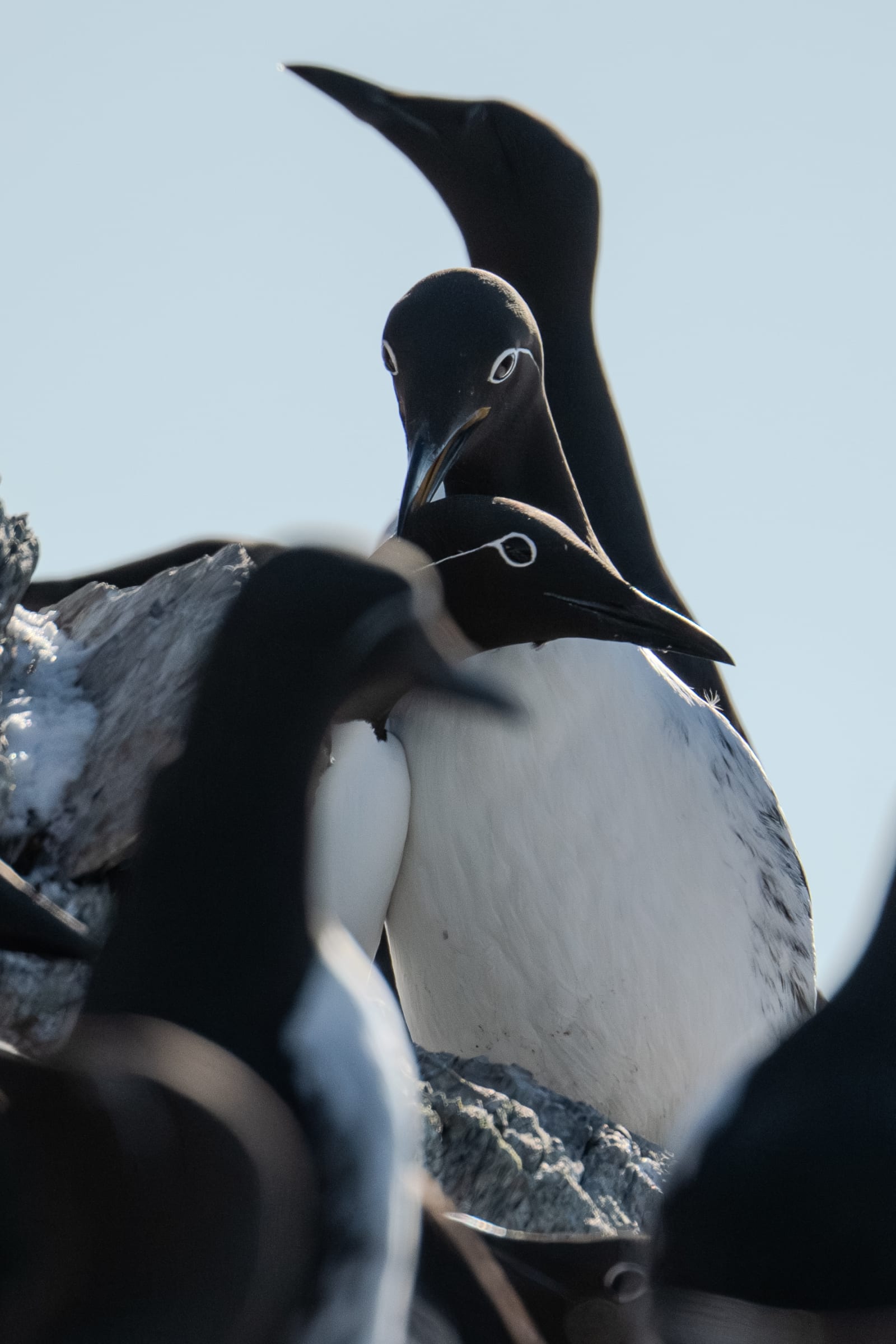
            <p>Group of common murres at Hornøya.</p>
<p>Murres are very social auks, that breed as tight as 20 pairs (40 individuals) per square meter. Being so close together offers better protection to the eggs and chicks, since neighbors can assist in fighting off predators.</p>
<p>Being this tight to your neighbor is guaranteed to to cause some commotion, and we observed many murres both cozing up to their neighbors, and getting into friendly arguments with them.</p>


        ]]>
      </content>
    </entry>
  
    <entry>
      <title>photo: Puffin portrait</title>
      
        <link href="https://fossheim.photography/photos/catalog/2024-06-19-hornoya/puffin-1" />
      
      
      <updated>2024-06-14T00:00:00.000Z</updated>
      
      
        <id>https://fossheim.photography/photos/catalog/2024-06-19-hornoya/puffin-1"</id>
      
      <content type="html"><![CDATA[
          
            <img src="https://res.cloudinary.com/dy8r02i02/image/upload/f_auto,w_1900,c_scale/DSC03068-Enhanced-NR-5_snj9h3" alt="Portrait of a puffin, sitting in green bushes, looking straight at the camera, with blurry aqua sea in the background." />
          
          
            <p>Atlantic puffin at Hornøya.</p>


        ]]>
      </content>
    </entry>
  
    <entry>
      <title>photo: Bridled Common Murre at Hornøya</title>
      
        <link href="https://fossheim.photography/photos/catalog/2024-06-19-hornoya/ringvi-1" />
      
      
      <updated>2024-08-27T00:00:00.000Z</updated>
      
      
        <id>https://fossheim.photography/photos/catalog/2024-06-19-hornoya/ringvi-1"</id>
      
      <content type="html"><![CDATA[
          
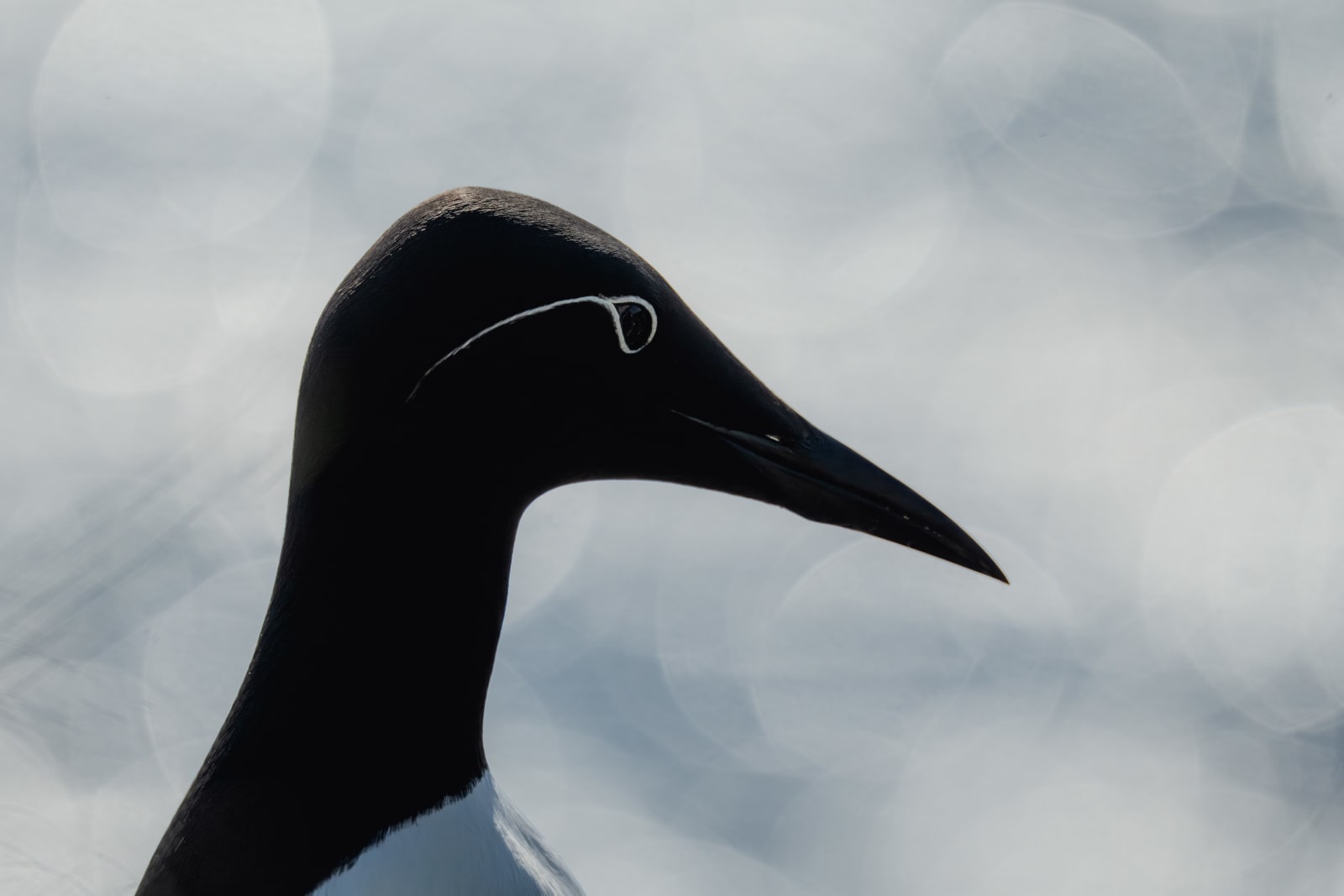
            <img src="https://res.cloudinary.com/dy8r02i02/image/upload/f_auto,w_1900,c_scale/ringvi-hornøya" alt="Portrait of a bridled common murre standing in front of a teal/blue blurry background (out of focus ocean), photographed from the chest up. The belly is white, the back and head are very dark brown (but look black), medium-sized sharp gray beak. Around its eye is a white circle and line, resembling glsses. The bird eye is in focus, along with tiny water droplets on top of the head. Light cimes from the left behind of the murre." />
          
          
            <p>Bridled common murre portrait, taken at Hornøya (in Finnmark, Norway). In Norwegian this variation of murre is often called a &quot;ringvi&quot;, merging the words &quot;ring&quot; and &quot;lomvi&quot; (murre).</p>
<p>The birds at Hornøya are not shy, and often running over the path and between people at Hornøya, actively checking out what the humans are up to. This one was standing a few meters away from me, overlooking the ocean.</p>
<p>This picture is available as <a href="https://shop.fossheim.photography/products/common-murre-portrait-hornoya">a print</a>, <a href="https://shop.fossheim.photography/products/bridled-common-murre-hornoya-spiral-notebook">notebook</a>, or <a href="https://shop.fossheim.photography/products/bridled-common-murre-white-glossy-mug">mug</a>.</p>

          
          <div class="size-full container content-light content-padded">
  <div class="container size-s">
<p><h2>About the bridled common murre</h2></p>
<p>Common murres come in two variants: Either their had is completely black (this is the most common), or with a white ring around the eyes. These are the same species, uria aalge, but they do have a few minor differences.</p>
<p>Bridled common murres are <a href="https://zslpublications.onlinelibrary.wiley.com/doi/10.1111/j.1469-7998.1984.tb05949.x">more common in the north compared to the south</a>. In some murre colonies in Portugal there are no bridled variants at all, while at Bjørnøya closer to Svalbard around half of them wear glasses. Bridled common murres are better adapted to the cold, and researchers have found that <a href="https://esajournals.onlinelibrary.wiley.com/doi/full/10.1890/ES12-00031R">mortality amongst them is higher when winters are warner</a>.</p>
<p><a href="https://link.springer.com/article/10.1007/s00265-014-1794-8">Whether the parents are both bridled, both non-bridled, or mixed seems to play a role in the size of the chicks</a>. This could indicate a difference in behavior or feeding tactic between both variations.</p>
  </div>
</div>
<div class="container size-l accent-headlines">
  <h2 class="text-center">More bridled common murre pictures</h2>
<div class="collection-photos container size-l">
<div class="collection-grid" data-stretch="" data-size="" data-type="medium" data-alignment="center" data-shape="normal" data-stretch="">
<div>
<a href="/photos/catalog/2024-06-19-hornoya/lomvi-bokeh/">
<img class="main-image" src="https://res.cloudinary.com/dy8r02i02/image/upload/f_auto,w_1900,c_scale/lomvi-bokeh_jbjcbl" alt="Common murre silhouette (chest upwards), with a blue sea full of blurry bokeh in the background." />
</a>
</div>
<div>
<a href="/photos/catalog/2024-04-09-varanger/lomvi-couple/">
<img class="main-image" src="https://res.cloudinary.com/dy8r02i02/image/upload/f_auto,w_1900,c_scale/lomvi-couple_sdm79m" alt="Telezoom portrait of two common murres cuddling and preening eachother, with murres blurred out in the foreground and background" />
</a>
</div>
<div>
<a href="/photos/catalog/2024-04-09-varanger/murre-portrait/">
<img class="main-image" src="https://res.cloudinary.com/dy8r02i02/image/upload/f_auto,w_1900,c_scale/murre-portrait-varanger_k4rjjj" alt="Telezoom portrait of a common murre, with out-of-focud rocks in the foreground. The myrre has a black head with black beak, and white &quot;glasses&quot; around the eyes, and is looking straight at the camera" />
</a>
</div>
</div>
</div>
  <p class="all">
    <a href="/species/uriaAalge/photos/">
      View all my common murre photos
    </a>
  </p>
</div>
        ]]>
      </content>
    </entry>
  
    <entry>
      <title>photo: Common murre</title>
      
        <link href="https://fossheim.photography/photos/catalog/2024-06-19-hornoya/lomvi-bokeh" />
      
      
      <updated>2024-06-14T00:00:00.000Z</updated>
      
      
        <id>https://fossheim.photography/photos/catalog/2024-06-19-hornoya/lomvi-bokeh"</id>
      
      <content type="html"><![CDATA[
          
            <img src="https://res.cloudinary.com/dy8r02i02/image/upload/f_auto,w_1900,c_scale/lomvi-bokeh_jbjcbl" alt="Common murre silhouette (chest upwards), with a blue sea full of blurry bokeh in the background." />
          
          
            <p>Common murre overlooking the sea.</p>


        ]]>
      </content>
    </entry>
  
    <entry>
      <title>photo: Kittiwake</title>
      
        <link href="https://fossheim.photography/photos/catalog/2024/2024-06-01-varanger/kittiwake-1" />
      
      
      <updated>2024-09-17T00:00:00.000Z</updated>
      
      
        <id>https://fossheim.photography/photos/catalog/2024/2024-06-01-varanger/kittiwake-1"</id>
      
      <content type="html"><![CDATA[
          
            <img src="https://res.cloudinary.com/dy8r02i02/image/upload/f_auto,w_1900,c_scale/shouting-kittiwake-1" alt="Black-legged kittiwake sitting on top of wood boxes, looking down at the camera shouting, exposing the bright red inside of the beak." />
          
          
            <p>Black-legged kittiwake sitting on top of one of the Kittiwake hotels in Vardø.</p>
<p>Here the kittiwakes have more and more moved from the bird cliffs into town, so locals built kittiwake hotels (breeding platforms) so they would nest away from the houses.</p>
<p>It was really nice to see so many healthy kittiwakes breeding in those boxes this year, especially after a catastrophic year with avian flu in 2023.</p>


        ]]>
      </content>
    </entry>
  
    <entry>
      <title>photo: Common murre</title>
      
        <link href="https://fossheim.photography/photos/catalog/2024-06-03-hornoya/lomvi-portrait-1" />
      
      
      <updated>2024-06-03T00:00:00.000Z</updated>
      
      
        <id>https://fossheim.photography/photos/catalog/2024-06-03-hornoya/lomvi-portrait-1"</id>
      
      <content type="html"><![CDATA[
          
            <img src="https://res.cloudinary.com/dy8r02i02/image/upload/f_auto,w_1900,c_scale/DSC00919-Enhanced-NR-1-edited_zgpc5o" alt="Portrait of a common murre. In the foreground there&#39;s a muddy hill, and behind the main murre there&#39;s another one that&#39;s out of focus." />
          
          
            <p>Common murre at Hornøya.</p>


        ]]>
      </content>
    </entry>
  
    <entry>
      <title>photo: Common murre portrait</title>
      
        <link href="https://fossheim.photography/photos/catalog/2024-06-03-hornoya/lomvi-portrait-2" />
      
      
      <updated>2024-08-06T00:00:00.000Z</updated>
      
      
        <id>https://fossheim.photography/photos/catalog/2024-06-03-hornoya/lomvi-portrait-2"</id>
      
      <content type="html"><![CDATA[
          
            <img src="https://res.cloudinary.com/dy8r02i02/image/upload/f_auto,w_1900,c_scale/DSC01583-Enhanced-NR-2_pofahk" alt="Portrait of a bridled common murre. In the foreground there&#39;s a green out of focus mossy rock, the background is the out  of focus ocean." />
          
          
            <p>Common murre at Hornøya (northern Norway). Here around 100,000 seabirds breed each summer season, and the murres are the most numerous species on the island, with over 15,000 breeding pairs.</p>
<p>This individual was hanging out with the shags, and taking a peek from behind a rock right next to the shoreline.</p>


        ]]>
      </content>
    </entry>
  
    <entry>
      <title>photo: Puffin portrait</title>
      
        <link href="https://fossheim.photography/photos/catalog/2024-06-03-hornoya/puffin-1" />
      
      
      <updated>2024-06-03T00:00:00.000Z</updated>
      
      
        <id>https://fossheim.photography/photos/catalog/2024-06-03-hornoya/puffin-1"</id>
      
      <content type="html"><![CDATA[
          
            <img src="https://res.cloudinary.com/dy8r02i02/image/upload/f_auto,w_1900,c_scale/DSC01046-Enhanced-NR-1-edited_f80f94" alt="Portrait of a puffin, sitting in outside of its burrow, overlooking a bright aqua sea full of bokeh, photographed from the side. It&#39;s a really bright and sunny day, and the picture has light and vibrant colors, with a lot of feather detail." />
          
          
            <p>Atlantic puffin at Hornøya.</p>


        ]]>
      </content>
    </entry>
  
    <entry>
      <title>photo: European Shag</title>
      
        <link href="https://fossheim.photography/photos/catalog/2024-06-03-hornoya/shag-skeleton-v0" />
      
      
      <updated>2024-06-03T00:00:00.000Z</updated>
      
      
        <id>https://fossheim.photography/photos/catalog/2024-06-03-hornoya/shag-skeleton-v0"</id>
      
      <content type="html"><![CDATA[
          
            <img src="https://res.cloudinary.com/dy8r02i02/image/upload/f_auto,w_1900,c_scale/shag-skeleton-v0" alt="European shag walking around with the skeleton of another european shag in its beak. He&#39;s walking right to left in the frame, and between grassy terrain." />
          
          
            <p>European shag (Gulosus aristotelis, formerly kown as Phalacrocorax aristotelis) proudly walking back to the nest with some very special stick: the skeleton of another shag.</p>
<p>We observed many shags returning back to their partner with new nest material for home renovations, which typically consited of kelp or similar, but this one really brought back the most special decoration. They were not the only one finding the remains of their neighbor (or love rival?) acceptable nest building material, we saw at least one other shag on a nest with bones woven into it.</p>


        ]]>
      </content>
    </entry>
  
    <entry>
      <title>photo: Common murre</title>
      
        <link href="https://fossheim.photography/photos/catalog/2024-06-03-hornoya/lomvi-group-1" />
      
      
      <updated>2024-06-03T00:00:00.000Z</updated>
      
      
        <id>https://fossheim.photography/photos/catalog/2024-06-03-hornoya/lomvi-group-1"</id>
      
      <content type="html"><![CDATA[
          
            <img src="https://res.cloudinary.com/dy8r02i02/image/upload/f_auto,w_1900,c_scale/DSC00953-Enhanced-NR-2-edited_doo4ii" alt="Group of 10-15 murres tightly standing together on the side of a cliff, with the ocean in the background. The two murres in the middle are mounting eachother." />
          
          
            <p>Common murres creating a new generation while their friends and family watch. Murres nest very close to eachother, which offers protection from predators, and it's often family that they nest next to. No privacy at all.</p>


        ]]>
      </content>
    </entry>
  
    <entry>
      <title>photo: European Shag</title>
      
        <link href="https://fossheim.photography/photos/catalog/2024-06-03-hornoya/shag-skeleton" />
      
      
      <updated>2024-09-04T00:00:00.000Z</updated>
      
      
        <id>https://fossheim.photography/photos/catalog/2024-06-03-hornoya/shag-skeleton"</id>
      
      <content type="html"><![CDATA[
          
            <img src="https://res.cloudinary.com/dy8r02i02/image/upload/f_auto,w_1900,c_scale/shag-skeleton" alt="European shag walking around with the skeleton of another european shag in its beak. He&#39;s walking right to left in the frame, and between grassy terrain." />
          
          
            <p>European shag (Gulosus aristotelis, formerly kown as Phalacrocorax aristotelis) proudly walking back to the nest with some very special stick: the skeleton of another shag.</p>
<p>We observed many shags returning back to their partner with new nest material for home renovations, which typically consited of kelp or similar, but this one really brought back the most special decoration. They were not the only one finding the remains of their neighbor (or love rival?) acceptable nest building material, we saw at least one other shag on a nest with bones woven into it.</p>


        ]]>
      </content>
    </entry>
  
    <entry>
      <title>photo: Kittiwake in Vardø</title>
      
        <link href="https://fossheim.photography/photos/catalog/2024-06-23-varanger/kittiwake-portrait-1" />
      
      
      <updated>2024-06-03T00:00:00.000Z</updated>
      
      
        <id>https://fossheim.photography/photos/catalog/2024-06-23-varanger/kittiwake-portrait-1"</id>
      
      <content type="html"><![CDATA[
          
            <img src="https://res.cloudinary.com/dy8r02i02/image/upload/f_auto,w_1900,c_scale/kittiwake-portrait-vardø-1" alt="Portrait of a black-legged kittiwake, photographed from the chest upwards. The kittiwake is standing on the right side of the picture, looking towards the left, and the colors are a very cool aqua blue with contrasting yellow sunlight. The kittiwake has a white head, black eyes with a red ring around it, and a short bright yellow beak." />
          
          
            <p>Portrait of a black-legged kittiwake, taken in the habor in Vardø (Finnmark, Norway), after our visit to Hornøya.</p>


        ]]>
      </content>
    </entry>
  
    <entry>
      <title>photo: Young kittiwake at Hornøya</title>
      
        <link href="https://fossheim.photography/photos/catalog/2024-06-23-varanger/kittiwake-flight" />
      
      
      <updated>2024-06-03T00:00:00.000Z</updated>
      
      
        <id>https://fossheim.photography/photos/catalog/2024-06-23-varanger/kittiwake-flight"</id>
      
      <content type="html"><![CDATA[
          
            <img src="https://res.cloudinary.com/dy8r02i02/image/upload/f_auto,w_1900,c_scale/kittiwake-hornøya-flying" alt="A young kittiwake (second year) flying small in frame against a light overcast sky, from the right of the frame to the left. Two auks are flying in the background." />
          
          
            <p>Second year kittiwake, photographed at Hornøya, an island which around a hundered thousand seabirds call home.</p>


        ]]>
      </content>
    </entry>
  
    <entry>
      <title>photo: Black-legged kittiwake</title>
      
        <link href="https://fossheim.photography/photos/catalog/2024-06-23-varanger/kittiwake-portrait-2" />
      
      
      <updated>2024-06-03T00:00:00.000Z</updated>
      
      
        <id>https://fossheim.photography/photos/catalog/2024-06-23-varanger/kittiwake-portrait-2"</id>
      
      <content type="html"><![CDATA[
          
            <img src="https://res.cloudinary.com/dy8r02i02/image/upload/f_auto,w_1900,c_scale/kiberg-kittiwake" alt="Portrait of a second year black-legged kittiwake, with a beige/brown blurry background. The kittiwake is photographed from the chest upwards, and has a white body, with gray wings, and some brown and black specks on the face." />
          
          
            <p>Black-legged kittiwake, photographed in Varanger, northern Norway.</p>


        ]]>
      </content>
    </entry>
  
    <entry>
      <title>photo: Black-legged kittiwake</title>
      
        <link href="https://fossheim.photography/photos/catalog/2024-06-23-varanger/kittiwake-roof" />
      
      
      <updated>2024-06-03T00:00:00.000Z</updated>
      
      
        <id>https://fossheim.photography/photos/catalog/2024-06-23-varanger/kittiwake-roof"</id>
      
      <content type="html"><![CDATA[
          
            <img src="https://res.cloudinary.com/dy8r02i02/image/upload/f_auto,w_1900,c_scale/DSC02746-Enhanced-NR_gzekkb" alt="adult kittiwake standing on top of a gull-poop-covered roof, on an overcast day, looking towards the right of the frame and shouting at something off-camera, beak wide open with the tongue out." />
          
          
            <p>Kittiwakes are so cute 🤍
Unfortunately, they have it really tough these days. Overfishing, climate change and human activity threaten their food and habitat, and last year they had a disastrous bird flu outbreak.
Additionally, in Norway the white-tailed eagle conservation has been so successful that the eagles are now so plentiful that the kittiwakes are being chased away from their cliffs, and into the coastal towns, like this one.</p>


        ]]>
      </content>
    </entry>
  
    <entry>
      <title>photo: Red-necked Phalarope</title>
      
        <link href="https://fossheim.photography/photos/catalog/2024/2024-04-03-kiberg/phalarope-1" />
      
      
      <updated>2025-02-06T00:00:00.000Z</updated>
      
      
        <id>https://fossheim.photography/photos/catalog/2024/2024-04-03-kiberg/phalarope-1"</id>
      
      <content type="html"><![CDATA[
          
            <img src="https://res.cloudinary.com/dy8r02i02/image/upload/f_auto,w_1900,c_scale/DSC01795-Enhanced-NR_pwyfjf" alt="Portrait of a female red-necked phalarope on a lake, with grass in the background. The phalarope has a gray body and head, with a white dot above the eye, a white belly, and a white patch on the chin. On each side of the neck, there&#39;s a strip with deep bright orange/red colored feathers." />
          
          
            <p>Female red-necked phalarope <em>(svømmesnipe)</em>, photographed in Varanger (Finnmark, Norway) at night under the midnight sun in June.</p>
<p>This is a female, which we can tell because of the color of the plumage, which is more saturated and higher in contrast than the male's feathers. The females are more grey and have a more defined red/orange neck, whereas the males are more brown and dull in color.</p>


        ]]>
      </content>
    </entry>
  
    <entry>
      <title>photo: Ruff</title>
      
        <link href="https://fossheim.photography/photos/catalog/2024/2024-06-01-varanger/ruff-1" />
      
      
      <updated>2025-05-04T00:00:00.000Z</updated>
      
      
        <id>https://fossheim.photography/photos/catalog/2024/2024-06-01-varanger/ruff-1"</id>
      
      <content type="html"><![CDATA[
          
            <img src="https://res.cloudinary.com/dy8r02i02/image/upload/f_auto,w_1900,c_scale/DSC00640-Enhanced-NR_twdb1t" alt="Male ruff with orange/brown neck feathers and yellow face, looking to the side of the screen with a stern expression. His belly feathers are a combo of white, black, and brown, and the feathers on his head are dark brown standing upwards. He&#39;s standing in grass, with a lake in the background." />
          
          
            <p>Male ruff (Calidris pugnax; brushane), photographed in Vadsø during the summer of 2024.</p>
<p>Ruffs are a type of wader, recognized by the classy and dramatic plummage of the males, who have big and colorful neck feathers.</p>
<p>They breed in wetlands in the mountains and along the coast, with their summer habitat stretching from Norway to the eastern-most part of Russia/Siberia. During winter, they migrate to Africa, south of the Sahara.</p>


        ]]>
      </content>
    </entry>
  
    <entry>
      <title>photo: Ruff</title>
      
        <link href="https://fossheim.photography/photos/catalog/2024/2024-06-01-varanger/ruff-2" />
      
      
      <updated>2025-05-04T00:00:00.000Z</updated>
      
      
        <id>https://fossheim.photography/photos/catalog/2024/2024-06-01-varanger/ruff-2"</id>
      
      <content type="html"><![CDATA[
          
            <img src="https://res.cloudinary.com/dy8r02i02/image/upload/f_auto,w_1900,c_scale/DSC00630-Enhanced-NR-2-2_qs0ebx" alt="Male ruff with orange/brown neck feathers and yellow face, looking to the side of the screen with a stern expression. He&#39;s standing in grass, with a lake in the background, and yellow grass behind the lake." />
          
          
            <p>Male ruff (Calidris pugnax; brushane), photographed in Vadsø during the summer of 2024.</p>
<p>Ruffs are a type of wader, recognized by the classy and dramatic plummage of the males, who have big and colorful neck feathers.</p>
<p>They breed in wetlands in the mountains and along the coast, with their summer habitat stretching from Norway to the eastern-most part of Russia/Siberia. During winter, they migrate to Africa, south of the Sahara.</p>


        ]]>
      </content>
    </entry>
  
    <entry>
      <title>photo: Ruff</title>
      
        <link href="https://fossheim.photography/photos/catalog/2024/2024-06-01-varanger/ruff-3" />
      
      
      <updated>2025-05-04T00:00:00.000Z</updated>
      
      
        <id>https://fossheim.photography/photos/catalog/2024/2024-06-01-varanger/ruff-3"</id>
      
      <content type="html"><![CDATA[
          
            <img src="https://res.cloudinary.com/dy8r02i02/image/upload/f_auto,w_1900,c_scale/DSC00609-Enhanced-NR_wzrzcw" alt="Male ruff with orange/brown neck feathers and yellow face, looking to the side of the screen. His neck and head feathers are laying down, hiding his beautiful manes quite a bit." />
          
          
            <p>Male ruff (Calidris pugnax; brushane), photographed in Vadsø during the summer of 2024.</p>
<p>Ruffs are a type of wader, recognized by the classy and dramatic plummage of the males, who have big and colorful neck feathers.</p>
<p>They breed in wetlands in the mountains and along the coast, with their summer habitat stretching from Norway to the eastern-most part of Russia/Siberia. During winter, they migrate to Africa, south of the Sahara.</p>


        ]]>
      </content>
    </entry>
  
    <entry>
      <title>photo: Common Murre  @ Hornøya</title>
      
        <link href="https://fossheim.photography/photos/catalog/2024-04-09-varanger/murre-portrait" />
      
      
      <updated>2024-04-09T00:00:00.000Z</updated>
      
      
        <id>https://fossheim.photography/photos/catalog/2024-04-09-varanger/murre-portrait"</id>
      
      <content type="html"><![CDATA[
          
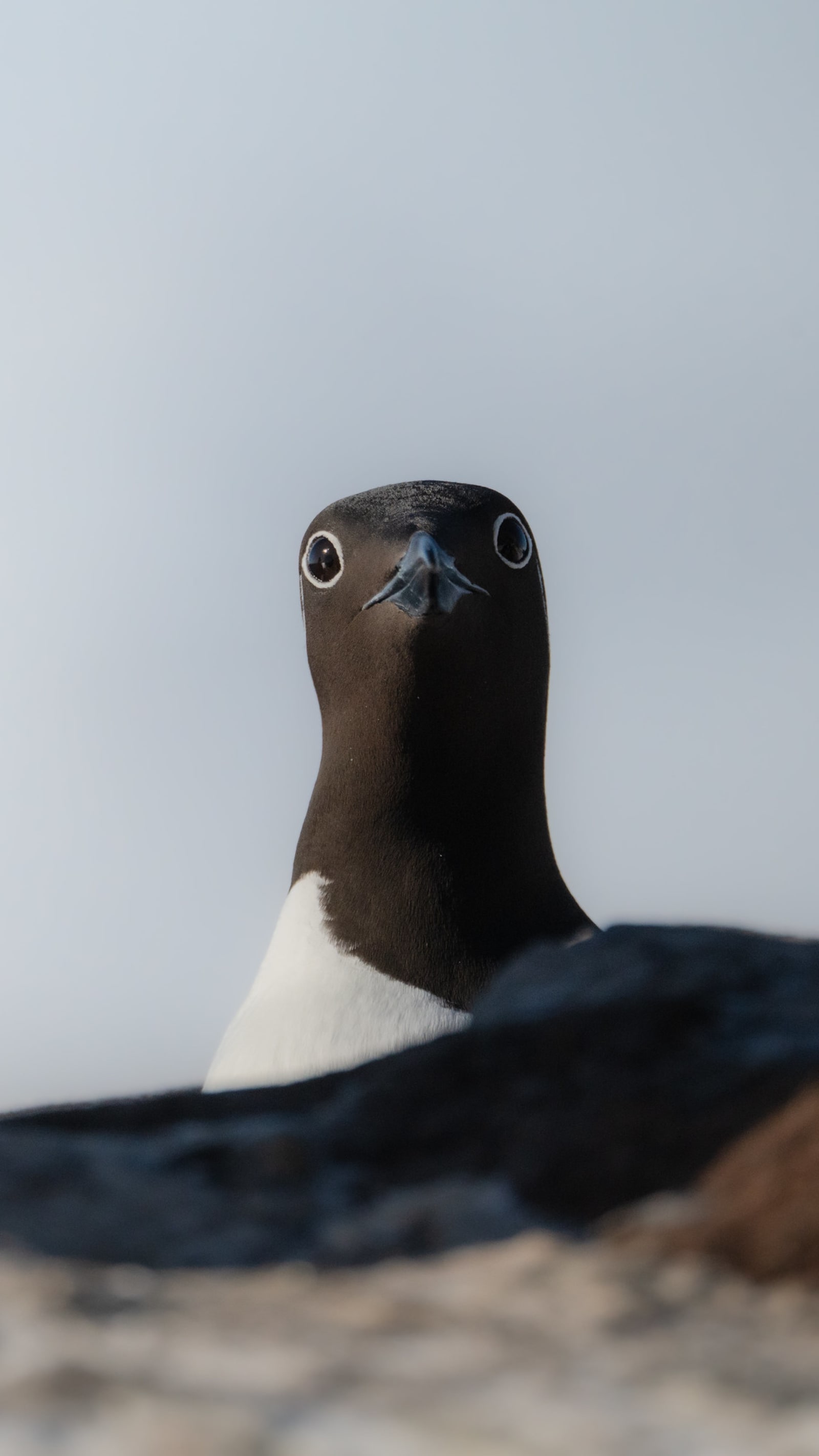
            <img src="https://res.cloudinary.com/dy8r02i02/image/upload/f_auto,w_1900,c_scale/murre-portrait-varanger_k4rjjj" alt="Telezoom portrait of a common murre, with out-of-focud rocks in the foreground. The myrre has a black head with black beak, and white &quot;glasses&quot; around the eyes, and is looking straight at the camera" />
          
          
            <p>Common murre photographed at Hornøya, an island in the northernmost and easternmost part of Norway.</p>
<p>Murres spend the majority of their life at sea, and only come on land to breed, which happens on steep seaside cliffs like these. This picture was taken at the start of April, when the seabirds had just returned to their nesting grounds.</p>
<p>This is the bridled version, in Norwegian also called &quot;ringvi&quot; (<em>ring-lomvi</em>), which has a white circle around the eyes that makes them look as if they're wearing glasses.</p>
<p>I thought this one individual looked particularly cute, checking me out from behind a rock. They're curious and <em>very</em> lively and social birds, it's so fun to observe.</p>


        ]]>
      </content>
    </entry>
  
    <entry>
      <title>photo: Common Murre  @ Hornøya</title>
      
        <link href="https://fossheim.photography/photos/catalog/2024-04-09-varanger/auks-in-flight" />
      
      
      <updated>2024-04-07T00:00:00.000Z</updated>
      
      
        <id>https://fossheim.photography/photos/catalog/2024-04-09-varanger/auks-in-flight"</id>
      
      <content type="html"><![CDATA[
          
            <img src="https://res.cloudinary.com/dy8r02i02/image/upload/f_auto,w_1900,c_scale/Auks_In_Flight_Hornøya_gki1tb" alt="Hundereds of auks, mainly common murres (and a handful of puffins, razorbills, and gulls), flying past the camera. It&#39;s a blue sky with light clouds in the background, and the picture is taken with a telezoom lens, causing the birds in the foreground and background to be slightly in movement and out of focus." />
          
          
            <p>When birds of prey fly past, all the auks instantly abandon their cliff, leading to a lot of <em>chaotic</em> sights like this one.</p>
<p>While I was on the island, the birds on the cliff flew off like this several times. And while it looked and sounded very chaotic (I mean, it's literally thousands of seabirds shouting and flying away in the sme direction, of course it's chaotic), they did seem quite synchronized and disciplined, and collisions are rare.</p>


        ]]>
      </content>
    </entry>
  
    <entry>
      <title>photo: Bridled common Murre at Hornøya</title>
      
        <link href="https://fossheim.photography/photos/catalog/2024/2024-04-07-hornoya/murre-snow-1" />
      
      
      <updated>2024-10-25T00:00:00.000Z</updated>
      
      
        <id>https://fossheim.photography/photos/catalog/2024/2024-04-07-hornoya/murre-snow-1"</id>
      
      <content type="html"><![CDATA[
          
            <img src="https://res.cloudinary.com/dy8r02i02/image/upload/f_auto,w_1900,c_scale/lomvi-snow-mountain" alt="Bridled common murre (with white eye ring) standing in front of a snowed in mountain." />
          
          
            <p>Common murre photographed at Hornøya, April 2024.</p>


        ]]>
      </content>
    </entry>
  
    <entry>
      <title>photo: Photobombing shag</title>
      
        <link href="https://fossheim.photography/photos/catalog/2024/2024-04-07-hornoya/photobombing-shag" />
      
      
      <updated>2024-11-12T00:00:00.000Z</updated>
      
      
        <id>https://fossheim.photography/photos/catalog/2024/2024-04-07-hornoya/photobombing-shag"</id>
      
      <content type="html"><![CDATA[
          
            <img src="https://res.cloudinary.com/dy8r02i02/image/upload/f_auto,w_1900,c_scale/DSC07604-Enhanced-NR_pcfpnm" alt="Three common guillemots (uria aalge) posing in front of a white snowed in mountain, with more murres/guillemots flying in the background. It almost looks peaceful, except in the foreground a european shag (type of cormorant) is crash landing into the snow, in the most dramatic way possible." />
          
          
            <p>I was taking a picture of this family of common murres/common guillemots (Uria aalge) posing while more auks flew by at Hornøya, when a European Shag (Phalacrocorax aristotelis) crashlanded in the snow right in front of me, creating this dramatic portrait.</p>
<p>Picture taken at Hornøya, by Vardø in the north of Norway.</p>


        ]]>
      </content>
    </entry>
  
    <entry>
      <title>photo: Purple Sandpiper, Varanger</title>
      
        <link href="https://fossheim.photography/photos/catalog/2024/2024-04-09-varanger/purple-sandpiper-1" />
      
      
      <updated>2024-08-29T00:00:00.000Z</updated>
      
      
        <id>https://fossheim.photography/photos/catalog/2024/2024-04-09-varanger/purple-sandpiper-1"</id>
      
      <content type="html"><![CDATA[
          
            <img src="https://res.cloudinary.com/dy8r02i02/image/upload/f_auto,w_1900,c_scale/nesseby-sandpiper-1" alt="Purple sandpiper foraging along an icey coastline, in purple light. The sandpiper is hanging forward, its long orange beak reachign for something on the ground right under the water." />
          
          
            <p>Purple sandpiper foraging for food along the coast by Nesseby in northern Norway.</p>
<p>When I realized how beautifully blue-purple the light became around sunset, I knew I had to head to a beach and find some purple sandpipers to photograph and photograph them in &quot;their&quot; light.</p>


        ]]>
      </content>
    </entry>
  
    <entry>
      <title>photo: Black-legged Kittiwake</title>
      
        <link href="https://fossheim.photography/photos/catalog/2024-04-09-varanger/kittiwake-hotel-1" />
      
      
      <updated>2024-04-05T00:00:00.000Z</updated>
      
      
        <id>https://fossheim.photography/photos/catalog/2024-04-09-varanger/kittiwake-hotel-1"</id>
      
      <content type="html"><![CDATA[
          
            <img src="https://res.cloudinary.com/dy8r02i02/image/upload/f_auto,w_1900,c_scale/DSC07839_fgs1cs" alt="Kittiwake sitting on its nest inside a breeding box" />
          
          
            <p>In order to avoid the kittiwakes nesting on people's homes and offer the kittiwakes a safe breeding ground, people in the &quot;kittiwake towns&quot; built hotels for their kittiwakes. This gives them an easy but controlled space to nest.</p>


        ]]>
      </content>
    </entry>
  
    <entry>
      <title>photo: Murre  couple</title>
      
        <link href="https://fossheim.photography/photos/catalog/2024-04-09-varanger/lomvi-couple" />
      
      
      <updated>2024-04-05T00:00:00.000Z</updated>
      
      
        <id>https://fossheim.photography/photos/catalog/2024-04-09-varanger/lomvi-couple"</id>
      
      <content type="html"><![CDATA[
          
            <img src="https://res.cloudinary.com/dy8r02i02/image/upload/f_auto,w_1900,c_scale/lomvi-couple_sdm79m" alt="Telezoom portrait of two common murres cuddling and preening eachother, with murres blurred out in the foreground and background" />
          
          
            <p>Two common murres preening eachother at Hornøya, a bird cliff in northern Norway. These are the bridled variation (also called &quot;ringvi&quot; in Norwegian), which have a white stripe around the eyes resembling glasses.</p>
<p>Bridled common murres are the same species (Uria aalge). The glasses are just a genetic variation, and are more common in northern regions.</p>


        ]]>
      </content>
    </entry>
  
    <entry>
      <title>photo: Black-legged Kittiwake</title>
      
        <link href="https://fossheim.photography/photos/catalog/2024-04-09-varanger/kittiwake-flight" />
      
      
      <updated>2024-04-05T00:00:00.000Z</updated>
      
      
        <id>https://fossheim.photography/photos/catalog/2024-04-09-varanger/kittiwake-flight"</id>
      
      <content type="html"><![CDATA[
          
            <img src="https://res.cloudinary.com/dy8r02i02/image/upload/f_auto,w_1900,c_scale/DSC06785_rodhus" alt="Black-legged kittiwake preparing for landing on the kittiwake hotel. The kittiwake is positioned directly above the camera, against a light bright blue sky, white wings spread out, black legs sticking out for landing, and beak wide open while shouting at their partner on the nest." />
          
          
            <p>Kittiwake about to land on a platform at the kittiwake hotel in Kiberg, Vardø kommune (Varanger/Finnmark, northern Norway). Here kittiwakes are starting to make their nests in the cities, rather than the nearby birdcliffs, where they find protection from predators like white-tailed eagles.</p>
<p>In order to avoid the kittiwakes nesting on people's homes and offer the kittiwakes a safe breeding ground, people in the &quot;kittiwake towns&quot; built hotels for their kittiwakes. This gives them an easy but controlled space to nest.</p>


        ]]>
      </content>
    </entry>
  
    <entry>
      <title>photo: Kittiwake</title>
      
        <link href="https://fossheim.photography/photos/catalog/2024-04-09-varanger/kittiwake-in-red" />
      
      
      <updated>2024-04-05T00:00:00.000Z</updated>
      
      
        <id>https://fossheim.photography/photos/catalog/2024-04-09-varanger/kittiwake-in-red"</id>
      
      <content type="html"><![CDATA[
          
            <img src="https://res.cloudinary.com/dy8r02i02/image/upload/f_auto,w_1900,c_scale/kittiwake-varanger_j3tx31" alt="Red wooden structure with diagonal lines, and small in frame a black-legged kittiwake flying in the bottom right." />
          
          
            <p>Kittiwake flying past a red wooden building, somewhere in Vardø municipality in Varanger (Finnmark, northernmost Norway).</p>
<p>I took this picture in the spring of '24 at one of the &quot;kittiwake hotels&quot; in Vardø.</p>
<p>Here kittiwakes have taken over the town, seeking shelter from the white-tailed eagles that roam the coastline, and kittiwake hotels (boxes stacked on top of eachother) have been built to discourage the kittiwakes from building their nests on the houses.</p>


        ]]>
      </content>
    </entry>
  
    <entry>
      <title>photo: Common murres flying around Hornøya</title>
      
        <link href="https://fossheim.photography/photos/catalog/2024-04-09-varanger/lomvi-flight-2" />
      
      
      <updated>2024-04-05T00:00:00.000Z</updated>
      
      
        <id>https://fossheim.photography/photos/catalog/2024-04-09-varanger/lomvi-flight-2"</id>
      
      <content type="html"><![CDATA[
          
            <img src="https://res.cloudinary.com/dy8r02i02/image/upload/f_auto,w_1900,c_scale/murre-flight_fy4s2a" alt="Common murres flying from the right to the left of the frame, against a bright aqua light sky" />


        ]]>
      </content>
    </entry>
  
    <entry>
      <title>photo: Common Murre @ Hornøya</title>
      
        <link href="https://fossheim.photography/photos/catalog/2024-04-09-varanger/lomvi-flight-pair" />
      
      
      <updated>2024-04-05T00:00:00.000Z</updated>
      
      
        <id>https://fossheim.photography/photos/catalog/2024-04-09-varanger/lomvi-flight-pair"</id>
      
      <content type="html"><![CDATA[
          
            <img src="https://res.cloudinary.com/dy8r02i02/image/upload/f_auto,w_1900,c_scale/lomvi-flight-pair_wm7ppk" alt="Two common murres in flight, photographed from right below them. The one on the right is flying lower, and is as a result bigger and out of focus. The one on the left is in focus, and the plumage of the underside of the body is well noticeable, with a black to white gradient." />
          
          
            <p>Two common murres returning to the cliff from an afternoon of fishing at sea.</p>


        ]]>
      </content>
    </entry>
  
    <entry>
      <title>photo: Common murre silhouette</title>
      
        <link href="https://fossheim.photography/photos/catalog/2024-04-09-varanger/lomvi-silhouette" />
      
      
      <updated>2024-04-05T00:00:00.000Z</updated>
      
      
        <id>https://fossheim.photography/photos/catalog/2024-04-09-varanger/lomvi-silhouette"</id>
      
      <content type="html"><![CDATA[
          
            <img src="https://res.cloudinary.com/dy8r02i02/image/upload/f_auto,w_1900,c_scale/lomvi-silhouette_lztsbr" alt="Silhouette of a common murre, overlooking a clear blue sky, while standing on a rock." />


        ]]>
      </content>
    </entry>
  
    <entry>
      <title>photo: Razorbills cuddling</title>
      
        <link href="https://fossheim.photography/photos/catalog/2024-04-09-varanger/razorbill-cuddling-bokeh-2" />
      
      
      <updated>2024-04-05T00:00:00.000Z</updated>
      
      
        <id>https://fossheim.photography/photos/catalog/2024-04-09-varanger/razorbill-cuddling-bokeh-2"</id>
      
      <content type="html"><![CDATA[
          
            <img src="https://res.cloudinary.com/dy8r02i02/image/upload/f_auto,w_1900,c_scale/razorbills-cuddling-1" alt="Two razorbills cuddling together in the snow, with a bright aqua sea in the background. The background is out of focus with a lot of bokeh, and the snow in the foreground creates a white haze. The razorbills are small black and white auks, and have a white vertical and horizontal line on their beak." />
          
          
            <p>Two razorbills cuddling together in the snow at Hornøya (Vardø, Finnmark), in April 2024, at the start of breeding season.</p>
<p>Razorbills are socially monogamous, like most seabirds, and return to the same nesting spot with the same partner each year. They mate for life, but divorces do happen, for example if one of them proves to be a bad parent, and they re-pair after their partner dies.</p>
<p>These two were enjoying some alone time, something that must be rare at crowded cliffs like this, preening eachother while enjoying the afternoon sun in the snow.</p>


        ]]>
      </content>
    </entry>
  
    <entry>
      <title>photo: Common murres flying around Hornøya</title>
      
        <link href="https://fossheim.photography/photos/catalog/2024-04-09-varanger/lomvi-flight" />
      
      
      <updated>2024-04-05T00:00:00.000Z</updated>
      
      
        <id>https://fossheim.photography/photos/catalog/2024-04-09-varanger/lomvi-flight"</id>
      
      <content type="html"><![CDATA[
          
            <img src="https://res.cloudinary.com/dy8r02i02/image/upload/f_auto,w_1900,c_scale/lomvi-flight_dd0fyw" alt="Common murres flying from the right to the left of the frame, against a bright aqua light sky" />


        ]]>
      </content>
    </entry>
  
    <entry>
      <title>photo: Common murre</title>
      
        <link href="https://fossheim.photography/photos/catalog/2024-04-09-varanger/lomvi-minimalist" />
      
      
      <updated>2024-08-13T00:00:00.000Z</updated>
      
      
        <id>https://fossheim.photography/photos/catalog/2024-04-09-varanger/lomvi-minimalist"</id>
      
      <content type="html"><![CDATA[
          
            <img src="https://res.cloudinary.com/dy8r02i02/image/upload/f_auto,w_1900,c_scale/lomvi-minimalist" alt="Small in frame common murre peeking from the bottom right corner of the image, jusgt the beak and face are in view." />


        ]]>
      </content>
    </entry>
  
    <entry>
      <title>photo: Razorbills cuddling in the snow</title>
      
        <link href="https://fossheim.photography/photos/catalog/2024-04-09-varanger/razorbill-cuddling-snow-1" />
      
      
      <updated>2024-04-05T00:00:00.000Z</updated>
      
      
        <id>https://fossheim.photography/photos/catalog/2024-04-09-varanger/razorbill-cuddling-snow-1"</id>
      
      <content type="html"><![CDATA[
          
            <img src="https://res.cloudinary.com/dy8r02i02/image/upload/f_auto,w_1900,c_scale/DSC08722-Enhanced-NR-Recovered_l_rtoqjc" alt="Two razorbills (black and white auks) cuddling in the snow. The razorbills are positioned in the bottom left corner of the frame, and the snowy hill in the foreground makes it so that just their black heads are visible, against a completely white background." />
          
          
            <p>I spotted these two razorbills rubbing their beaks and heads together, cuddling surrounded by snow. I found a pile of snow in the foreground to position myself behind, which let me create the white haze in the foreground and also gave our lovebirds some space.</p>
<p>Razorbills, just like most seabirds, are monogamous and mate for life, returning to the same nest and partner each year.</p>


        ]]>
      </content>
    </entry>
  
    <entry>
      <title>photo: Auks fleeing the eagles</title>
      
        <link href="https://fossheim.photography/photos/catalog/2024-04-09-varanger/razorbill-flight" />
      
      
      <updated>2024-08-13T00:00:00.000Z</updated>
      
      
        <id>https://fossheim.photography/photos/catalog/2024-04-09-varanger/razorbill-flight"</id>
      
      <content type="html"><![CDATA[
          
            <img src="https://res.cloudinary.com/dy8r02i02/image/upload/f_auto,w_1900,c_scale/razorbills-sky" alt="Two razorbills, small in frame, sitting on a rock in the bottom right corner of the image. In the background, thousands of auks (murres, razorbills, and puffins) take flight." />
          
          
            <p>When the white-tailed eagle gets observed at the cliff, the auks flee the scene and thousands of seabirds fill the sky.</p>
<p>These two razorbills, positioned on a rock below the bird cliff felt safe from the threat and remained in place, vigilantly keeping an eye on the activity above them in the sky.</p>
<p>During my time at Hornøya during spring 2024, I saw the murres, razorbills, puffins, and kittiwakes fly off in a panic many times, startled by the predators.</p>


        ]]>
      </content>
    </entry>
  
    <entry>
      <title>photo: Razorbills cuddling</title>
      
        <link href="https://fossheim.photography/photos/catalog/2024-04-09-varanger/razorbill-cuddling-bokeh" />
      
      
      <updated>2024-04-05T00:00:00.000Z</updated>
      
      
        <id>https://fossheim.photography/photos/catalog/2024-04-09-varanger/razorbill-cuddling-bokeh"</id>
      
      <content type="html"><![CDATA[
          
            <img src="https://res.cloudinary.com/dy8r02i02/image/upload/f_auto,w_1900,c_scale/53683587522_cba5e66270_k_x70odk" alt="Two razorbills cuddling together in the snow, with a bright aqua sea in the background. The background is out of focus with a lot of bokeh, and the snow in the foreground creates a white haze. The razorbills are small black and white auks, and have a white vertical and horizontal line on their beak." />
          
          
            <p>Two razorbills cuddling together in the snow at Hornøya (Vardø, Finnmark), in April 2024, at the start of breeding season.</p>
<p>Razorbills are socially monogamous, like most seabirds, and return to the same nesting spot with the same partner each year. They mate for life, but divorces do happen, for example if one of them proves to be a bad parent, and they re-pair after their partner dies.</p>
<p>These two were enjoying some alone time, something that must be rare at crowded cliffs like this, preening eachother while enjoying the afternoon sun in the snow.</p>


        ]]>
      </content>
    </entry>
  
    <entry>
      <title>photo: Razorbill</title>
      
        <link href="https://fossheim.photography/photos/catalog/2024-04-09-varanger/razorbill-portrait-1" />
      
      
      <updated>2024-04-05T00:00:00.000Z</updated>
      
      
        <id>https://fossheim.photography/photos/catalog/2024-04-09-varanger/razorbill-portrait-1"</id>
      
      <content type="html"><![CDATA[
          
            <img src="https://res.cloudinary.com/dy8r02i02/image/upload/f_auto,w_1900,c_scale/razorbill_hlcssp" alt="Razorbill sitting on a rock in front of a deep blue sea. The razorbill is a medium-small seabird of the auk family. Its belly is white, back and wings and head are black. They have a white vertical stripe on the beak and a white horizontal stripe right above the beak." />


        ]]>
      </content>
    </entry>
  
    <entry>
      <title>photo: Cuddling razorbills</title>
      
        <link href="https://fossheim.photography/photos/catalog/2024/2024-04-05-hornoya/cuddling-razorbill" />
      
      
      <updated>2025-05-03T00:00:00.000Z</updated>
      
      
        <id>https://fossheim.photography/photos/catalog/2024/2024-04-05-hornoya/cuddling-razorbill"</id>
      
      <content type="html"><![CDATA[
          
            <img src="https://res.cloudinary.com/dy8r02i02/image/upload/f_auto,w_1900,c_scale/DSC07030-Enhanced-NR_susohz" alt="Two razorbills cuddling, with blurry hazy snow in the foreground, and a bright blue sea with shiny bokeh behind them." />
          
          
            <p>Cuddling razorbills (Alca torda), photographed at Hornøya in the spring of 2024.</p>
<p>Razorbills are socially monogamous. They'll pick a partner and stick with them for life, but, just like amongst humans, divorces may happen.</p>


        ]]>
      </content>
    </entry>
  
    <entry>
      <title>photo: Falling Razorbill</title>
      
        <link href="https://fossheim.photography/photos/catalog/2024/2024-04-05-hornoya/falling-razorbill" />
      
      
      <updated>2025-04-23T00:00:00.000Z</updated>
      
      
        <id>https://fossheim.photography/photos/catalog/2024/2024-04-05-hornoya/falling-razorbill"</id>
      
      <content type="html"><![CDATA[
          
            <img src="https://res.cloudinary.com/dy8r02i02/image/upload/f_auto,w_1900,c_scale/falling-razorbills" alt="Cliff with 4 razorbills. One of them is landing on the edge of it, wings spread out and with a dramatic expression, making it seem as if he&#39;s falling off the cliff. Two of the other razorbills are looking at him with their beaks open, as if they&#39;re laughing." />
          
          
            <p>Razorbills (Alca torda) at Hornøya.</p>
<p>The razorbill on the left is actually just making a landing. But the postures and facial expressions of all of them made it seem as if he clumsely fell off the cliff while his friends were laughing at him.</p>


        ]]>
      </content>
    </entry>
  
    <entry>
      <title>photo: Common Murre Escape</title>
      
        <link href="https://fossheim.photography/photos/catalog/2024/2024-04-05-hornoya/lomvi-escape" />
      
      
      <updated>2024-09-17T00:00:00.000Z</updated>
      
      
        <id>https://fossheim.photography/photos/catalog/2024/2024-04-05-hornoya/lomvi-escape"</id>
      
      <content type="html"><![CDATA[
          
            <img src="https://res.cloudinary.com/dy8r02i02/image/upload/f_auto,w_1900,c_scale/lomvi-escape" alt="Group of around 20 common murres (black and white seabirds of the auk family) in flight, against a blue sky." />
          
          
            <p>It's quite incredible that they don't have constant collisions, because as soon as predators are observed thousands of seabirds synchronously abandon the cliff.</p>


        ]]>
      </content>
    </entry>
  
    <entry>
      <title>photo: Common Murre with dinner</title>
      
        <link href="https://fossheim.photography/photos/catalog/2024/2024-04-05-hornoya/lomvi-dinner" />
      
      
      <updated>2024-09-17T00:00:00.000Z</updated>
      
      
        <id>https://fossheim.photography/photos/catalog/2024/2024-04-05-hornoya/lomvi-dinner"</id>
      
      <content type="html"><![CDATA[
          
            <img src="https://res.cloudinary.com/dy8r02i02/image/upload/f_auto,w_1900,c_scale/lomvi-dinner" alt="Common murre flying from right to left of the frame, with a fish in its beak. In the backgrpound are 5 other murres flying in the opposite direction, left to right. It&#39;s a sunny day with blue skies." />
          
          
            <p>When birds of prey are observed around the bird cliff at Hornøya, most of the auks promptly abandon their nesting grounds, flying out to the open sea and counting on the safety of being in a larger flock.</p>
<p>But not this one bridled common murre. While all of the neighbors fled the white-tailed eagle, this individual decided to proudly fly back to the cliff with a meal in the beak. Maybe supplying their partner on the nest with an emergency snack?</p>


        ]]>
      </content>
    </entry>
  
    <entry>
      <title>photo: European Shag</title>
      
        <link href="https://fossheim.photography/photos/catalog/2024/2024-04-05-hornoya/shag-1" />
      
      
      <updated>2024-09-17T00:00:00.000Z</updated>
      
      
        <id>https://fossheim.photography/photos/catalog/2024/2024-04-05-hornoya/shag-1"</id>
      
      <content type="html"><![CDATA[
          
            <img src="https://res.cloudinary.com/dy8r02i02/image/upload/f_auto,w_1900,c_scale/shag-bw-1" alt="Black and white close-up of a shag preening its feathers, looking backwards touching feathers on the back." />
          
          
            <p>European shag preening them self at Hornøya. The shags easily became one of my favorite seabirds after this summer, they have so much personality.</p>


        ]]>
      </content>
    </entry>
  
    <entry>
      <title>photo: European Shag</title>
      
        <link href="https://fossheim.photography/photos/catalog/2024/2024-04-05-hornoya/shag-2" />
      
      
      <updated>2024-09-17T00:00:00.000Z</updated>
      
      
        <id>https://fossheim.photography/photos/catalog/2024/2024-04-05-hornoya/shag-2"</id>
      
      <content type="html"><![CDATA[
          
            <img src="https://res.cloudinary.com/dy8r02i02/image/upload/f_auto,w_1900,c_scale/young-shag-1" alt="Portrait of a young european shag, looking directly at the camera. Its body feathers still have a brown-ish color, the patch on the chin is white, and the beak is yellow and black." />
          
          
            <p>Young European Shag at Hornøya, photographed in April 2024. On my way off the island, right next to the boat pickup, I met a group of sunbathing young shags.</p>
<p>They're so cute, and have such fun facial expressions. Meeting them up close at Hornøya definitely made me appreciate shags more.</p>
<p>Their clumsy movements, interesting interactions, and dinosaur-like sounds make them a very exciting bird to observe. Murres, razorbills, and puffins may be the Hornøya birds people are most drawn to due to their stunning visuals, when it comes to behavior and personality, the shags are the clear winners.</p>


        ]]>
      </content>
    </entry>
  
    <entry>
      <title>photo: Purple Sandpiper, Varanger</title>
      
        <link href="https://fossheim.photography/photos/catalog/2024/2024-04-09-varanger/purple-sandpiper-4" />
      
      
      <updated>2024-08-29T00:00:00.000Z</updated>
      
      
        <id>https://fossheim.photography/photos/catalog/2024/2024-04-09-varanger/purple-sandpiper-4"</id>
      
      <content type="html"><![CDATA[
          
            <img src="https://res.cloudinary.com/dy8r02i02/image/upload/f_auto,w_1900,c_scale/nesseby-sandpiper-4" alt="Purple sandpiper foraging in very reflective light blue water that has small pieces of ice drifting into it, on a sunny day. The sandpiper is about to take something out of the water, looking at its own reflection." />
          
          
            <p>Purple sandpiper foraging for food along the coast by Nesseby in northern Norway.</p>
<p>The tides are very noticeable at this beach, and many waders can be found following the water. During winter and spring, that's mainly purple sandpipers, which are tough enough to overwinter in the north of Norway as well.</p>


        ]]>
      </content>
    </entry>
  
    <entry>
      <title>photo: Purple Sandpiper, Varanger</title>
      
        <link href="https://fossheim.photography/photos/catalog/2024/2024-04-09-varanger/purple-sandpiper-2" />
      
      
      <updated>2024-08-29T00:00:00.000Z</updated>
      
      
        <id>https://fossheim.photography/photos/catalog/2024/2024-04-09-varanger/purple-sandpiper-2"</id>
      
      <content type="html"><![CDATA[
          
            <img src="https://res.cloudinary.com/dy8r02i02/image/upload/f_auto,w_1900,c_scale/nesseby-sandpiper-2" alt="Purple sandpiper foraging in the water. The water is dark blue, and from the top right corner there&#39;s orange light coming into frame. The sandpiper is walking from the top right to the bottom left of the image, and standing on a twig." />
          
          
            <p>Purple sandpiper foraging for food along the coast by Nesseby in northern Norway.</p>
<p>The tides are very noticeable at this beach, and many waders can be found following the water. During winter and spring, that's mainly purple sandpipers, which are tough enough to overwinter in the north of Norway as well.</p>


        ]]>
      </content>
    </entry>
  
    <entry>
      <title>photo: Purple Sandpiper, Varanger</title>
      
        <link href="https://fossheim.photography/photos/catalog/2024/2024-04-09-varanger/purple-sandpiper-3" />
      
      
      <updated>2024-08-29T00:00:00.000Z</updated>
      
      
        <id>https://fossheim.photography/photos/catalog/2024/2024-04-09-varanger/purple-sandpiper-3"</id>
      
      <content type="html"><![CDATA[
          
            <img src="https://res.cloudinary.com/dy8r02i02/image/upload/f_auto,w_1900,c_scale/nesseby-sandpiper-3" alt="Group of purple sandpipers foraging in the water. Two of them in the middle are in focus. In front and behind them are out of focus sandpipers." />
          
          
            <p>Purple sandpiper foraging for food along the coast by Nesseby in northern Norway.</p>
<p>The tides are very noticeable at this beach, and many waders can be found following the water. During winter and spring, that's mainly purple sandpipers, which are tough enough to overwinter in the north of Norway as well.</p>


        ]]>
      </content>
    </entry>
  
    <entry>
      <title>photo: Purple Sandpiper, Varanger</title>
      
        <link href="https://fossheim.photography/photos/catalog/2024/2024-04-09-varanger/purple-sandpiper-5" />
      
      
      <updated>2024-08-29T00:00:00.000Z</updated>
      
      
        <id>https://fossheim.photography/photos/catalog/2024/2024-04-09-varanger/purple-sandpiper-5"</id>
      
      <content type="html"><![CDATA[
          
            <img src="https://res.cloudinary.com/dy8r02i02/image/upload/f_auto,w_1900,c_scale/nesseby-sandpiper-5" alt="Purple sandpiper foraging in very reflective light blue water. The sandpiper is having its beak in the water, while walking from the right to the left of the frame." />
          
          
            <p>Purple sandpiper foraging for food along the coast by Nesseby in northern Norway.</p>
<p>The tides are very noticeable at this beach, and many waders can be found following the water. During winter and spring, that's mainly purple sandpipers, which are tough enough to overwinter in the north of Norway as well.</p>


        ]]>
      </content>
    </entry>
  
    <entry>
      <title>photo: Porsanger</title>
      
        <link href="https://fossheim.photography/photos/catalog/2023-finnmark/porsanger-cabin" />
      
      
      <updated>2023-08-23T00:00:00.000Z</updated>
      
      
        <id>https://fossheim.photography/photos/catalog/2023-finnmark/porsanger-cabin"</id>
      
      <content type="html"><![CDATA[
          
            <img src="https://res.cloudinary.com/dy8r02i02/image/upload/f_auto,w_1900,c_scale/53151343134_7eeadc6d46_k_kdxaw8" alt="Wooden shed that&#39;s falling apart, by a lake surrounded by green grass, and the fjord in the background. The mountains and sky in the background are different shades of blue. The foreground consists of different greens and oranges in the grass." />
          
          
            <p>Old wooden shed sonewhere in Porsanger municipality (northern Norway), during the last hike of our trip in the summer of 2023. We felt so sad to have to return back south, but got to say goodbye to the region with one last gorgeous hike during blue hour.</p>
<p>It's a simple pictures, but it's one of my favorites from that trip.</p>


        ]]>
      </content>
    </entry>
  
    <entry>
      <title>photo: Havørn 🦅</title>
      
        <link href="https://fossheim.photography/photos/catalog/2023-finnmark/gjesvær-havørn" />
      
      
      <updated>2023-08-13T00:00:00.000Z</updated>
      
      
        <id>https://fossheim.photography/photos/catalog/2023-finnmark/gjesvær-havørn"</id>
      
      <content type="html"><![CDATA[
          
            <img src="https://res.cloudinary.com/dy8r02i02/image/upload/f_auto,w_1900,c_scale/53173573220_eadf8fec17_k_l3somm" alt="White-tailed eagle sitting on a rock, in front of other rocks. The rocks are gray, with horizontal stripes in a different gray, yellow lichen, and some dry grass here and there. The eagle is brown/white speckled with a yellow beak and feet, and blends in excellently with his environment." />
          
          
            <p>White-tailed Eagle (Havørn or sea eagle in Norwegian), on the lookout for a prey, by a bird cliff in Finnmark. The eagle blends in very well with the rocky landscape in the North, and this individual is a great example of the camouflage.</p>


        ]]>
      </content>
    </entry>
  
    <entry>
      <title>photo: White-tailed eagle</title>
      
        <link href="https://fossheim.photography/photos/catalog/2023-finnmark/gjesvær-havørn-2" />
      
      
      <updated>2023-08-13T00:00:00.000Z</updated>
      
      
        <id>https://fossheim.photography/photos/catalog/2023-finnmark/gjesvær-havørn-2"</id>
      
      <content type="html"><![CDATA[
          
            <img src="https://res.cloudinary.com/dy8r02i02/image/upload/f_auto,w_1900,c_scale/DSC01492-Enhanced-NR-2_wyyndz" alt="White-tailed eagle sitting on a rock, in front of other rocks. The rocks are covered in moss, and cast a blue-ish shadow in the background. The eagle has a white tail, huge yellow beak, and big white claws. The body is brown, and has white spots on the face." />
          
          
            <p>White-tailed Eagle (Havørn or sea eagle in Norwegian), on the lookout for a prey, by a bird cliff in Finnmark.</p>


        ]]>
      </content>
    </entry>
  
</feed>